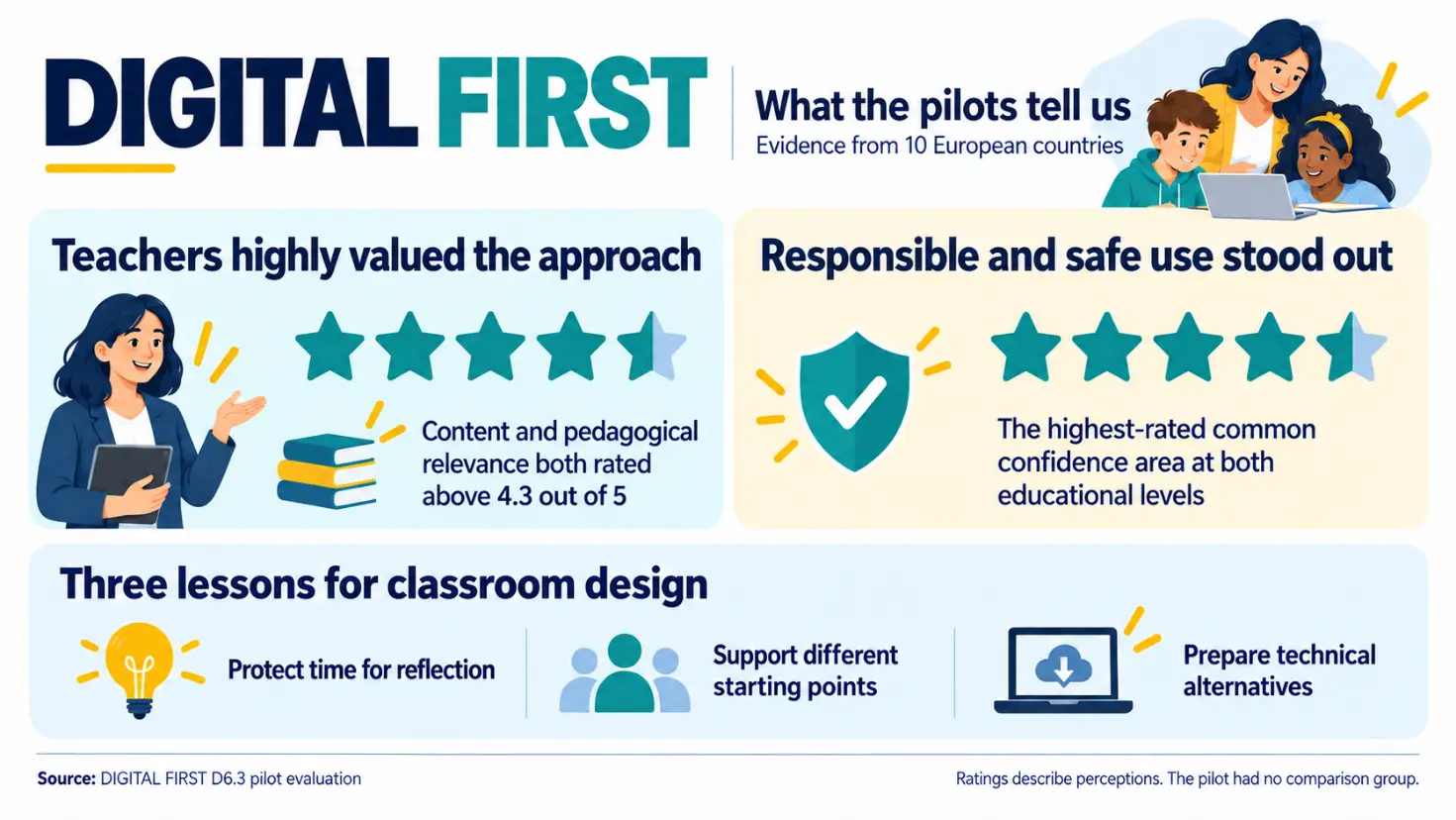

The DIGITAL FIRST project’s Dialogue Clubs have uncovered valuable insights essential for reshaping informatics education. The initial Dialogue Clubs highlighted students’ widespread use of digital technologies as a means of self-expression, emphasising a critical need for enhanced digital literacy.
As digital tools become increasingly integral to education, including cybersecurity awareness in school curricula has become crucial. According to the EU Kids Online survey (2020), which surveyed 25,101 children aged 9–16 across 19 European countries, approximately 11% of respondents experienced data misuse or abuse, underlining a significant gap in online security awareness among young people.
In response, the European Union has prioritised cybersecurity education. Guided by initiatives such as the Digital Education Action Plan (2021–2027) and the Cybersecurity Act, the EU actively promotes integrating digital skills, including cybersecurity, into education systems. The European Union Agency for Cybersecurity (ENISA) supports member states through resources such as the CyberEducation Platform, designed to enhance cybersecurity awareness among youth.
The Digital Education Action Plan stresses the importance of collaboration among educational authorities to provide educators with essential resources and training. Integrating cybersecurity awareness across various disciplines ensures that students develop the skills necessary to protect themselves online and effectively respond to cybersecurity threats.
Cybersecurity education brings together technical, human and societal dimensions, preparing students and professionals to manage digital challenges ethically and responsibly. Siddhant Mishra’s article, “Integrating Cybersecurity Education into the Curriculum: Best Practices and Implementation Challenges,” explores successful case studies and educational frameworks, highlighting cross-disciplinary approaches, project-based learning and collaborations with industry experts.
Adopting a cross-disciplinary approach enables educators to embed cybersecurity principles beyond traditional computer science courses, making cybersecurity education more relevant and comprehensive. This multidisciplinary method underscores how cybersecurity intersects with broader societal issues and promotes collaborative learning and critical thinking. Students gain insight into cybersecurity’s practical applications across different professional domains, promoting deeper understanding and engagement.
Project-based learning (PBL) effectively engages students through hands-on cybersecurity scenarios, enabling them to apply theoretical knowledge practically. Examples include students designing secure software, assessing network vulnerabilities and strategising to prevent cyber-attacks. Successful implementations of PBL include programs like CyberPatriot, where students participate in national cybersecurity competitions involving simulated network defence tasks and Capture The Flag (CTF) events, where students collaboratively solve cybersecurity puzzles and challenges.
Finally, partnerships with industry professionals significantly enhance cybersecurity education. Experts provide valuable insights into current cybersecurity trends and practices, contributing to a more dynamic learning environment. Schools can utilise guest lectures, workshops and mentorship programs from cybersecurity professionals, which are equipping students with practical knowledge and valuable industry connections, further preparing them for future careers in cybersecurity.
Drawing from insights gained through Dialogue Clubs, the DIGITAL FIRST project will also focus on cybersecurity. Project partners are developing comprehensive teaching and learning resources to pilot a functional approach to informatics education, including cybersecurity, in primary and secondary schools.