The Commission has published a new Flash Eurobarometer survey on the “Future Needs in Digital Education”. The survey explores EU citizens’ views on the role of teachers, artificial intelligence in education, the overall benefits of technology in teaching and learning, and digital wellbeing, among others.
Key Highlights:
- Respondents expressed widespread agreement (92%) that digital skills should be taught at all levels of education. Most citizens believe that digital skills should receive the same amount of attention at school as reading, mathematics, and science (78%).
- More than half (54%) of the respondents acknowledge both the benefits and challenges AI brings to teaching and learning, and 81% agree that all teachers should be able to use and understand AI.
- EU citizens also see teachers (88%) and parents (87%) as essential guides in educating young people on how to use technology safely and manage its impact on their health.
- Most respondents agree that the EU can best support successful digital education by developing EU-wide standards for digital technology use in education, including data privacy and AI.
The Eurobarometer survey contributes to the mid-term review of the Digital Education Action Plan (2021-2027) and will inform the upcoming 2030 Roadmap on the future of digital education and skills, to be adopted in late 2026 as part of the implementation of the Union of Skills.
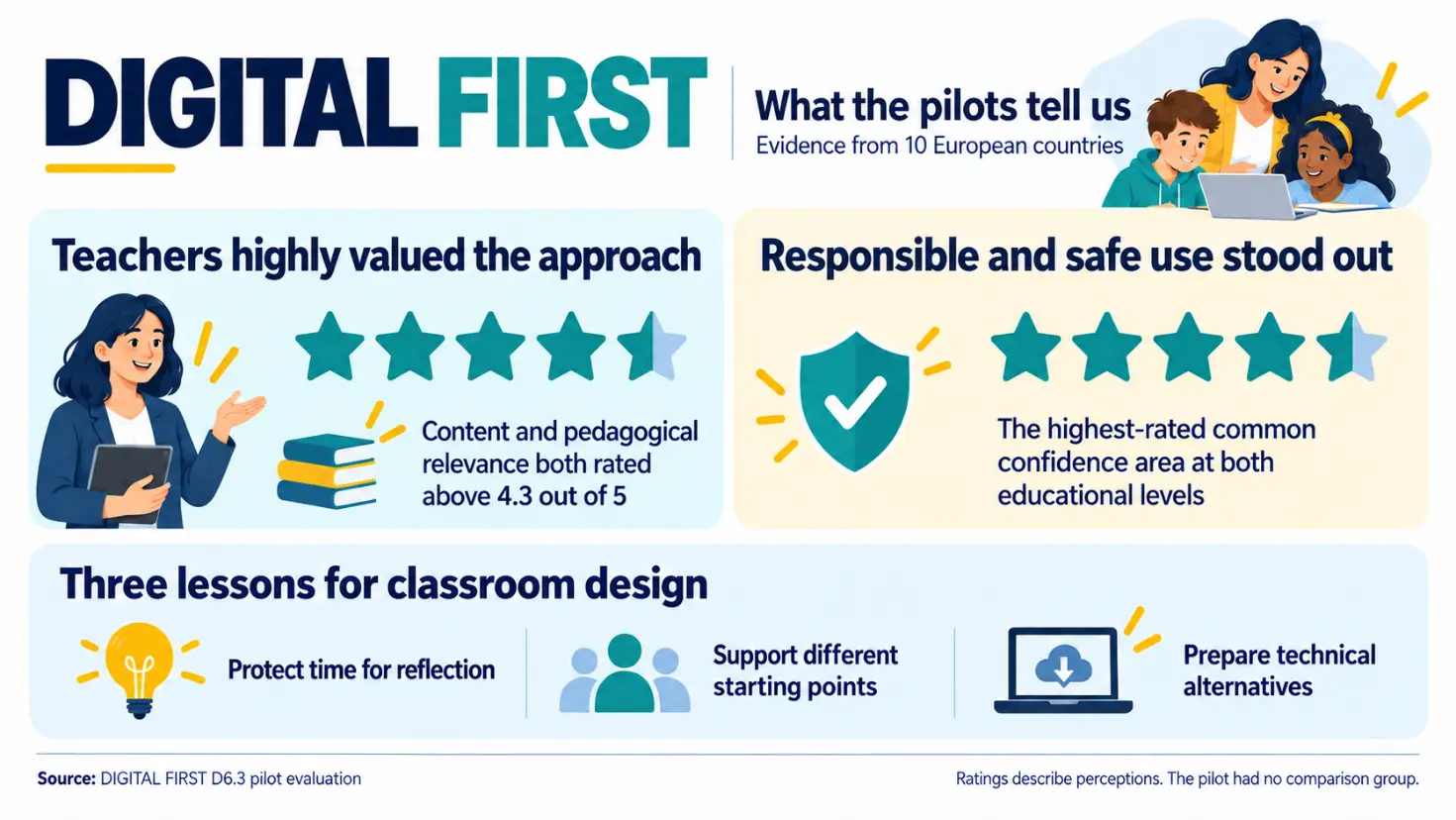
These findings resonate with the objectives of the Digital First project, which calls for a shift from traditional approaches to informatics education towards more innovative pedagogical practices. By learning informatics, students can safely and critically navigate the internet, turning these policy priorities into classroom practice.
For more information, read the full Eurobarometer report, accompanied by an infographic and country-specific factsheets for each of the 27 Member States.