
When new approaches developed through collaboration between partners across countries are recognised at European level, it shows they are addressing something that truly matters.
That is exactly what has happened with our Digital First project, which is featured in the newly published European Commission report:“Guidelines for Teaching Informatics: Practical Strategies for European Classrooms.”
This recognition highlights our work as part of a broader shift in Europe towards more meaningful, student-centred informatics education tailored to a new generation of learners – digital natives.
A European shift: from structural approach to understanding
Across Europe, informatics is still often taught as a technical subject focused on syntax, tools and correct answers.
The new EU guidelines point to a different direction.
They encourage teachers to move towards learning that is:
- inclusive and accessible to all students
- engaging and relevant to everyday life
- focused on understanding, not just execution
In other words, informatics is no longer just about learning how technology works, it is about helping students think, solve problems, and interact with technology in a confident and creative way.
What Digital First brings to this vision
This is exactly where Digital First contributes.
Our project focuses on one key shift: from teaching the structure of computers and how programs work → to helping students understand why they matter and how to use them critically and creatively.
We develop and promote a functional approach to informatics, where technology is treated as a tool for:
- problem-solving
- communication
- creative expression
Instead of overwhelming students with syntax, we:
- emphasise computational thinking
- use functional language closer to how students naturally think
- support intuitive interaction with technology
Through our Dialogue Clubs, we connect teachers, researchers and stakeholders from multiple European countries, creating a space where classroom experience and new ideas meet.
This approach, grounded in collaboration and practice, is exactly what the guidelines recognise as valuable.
Why this matters beyond our project
Being recognised in EU guidelines is not just about visibility.
It means that this approach:
- responds to real challenges teachers face
- can be adapted across different education systems
- has the potential to inspire wider change
It also highlights the role of our teachers, who are not just participants, but early adopters of new approaches in informatics education.
For all of us involved, this recognition is a strong motivation, a real wind at our back.
Already happening in classrooms
What makes this especially meaningful is that the work is already in motion.
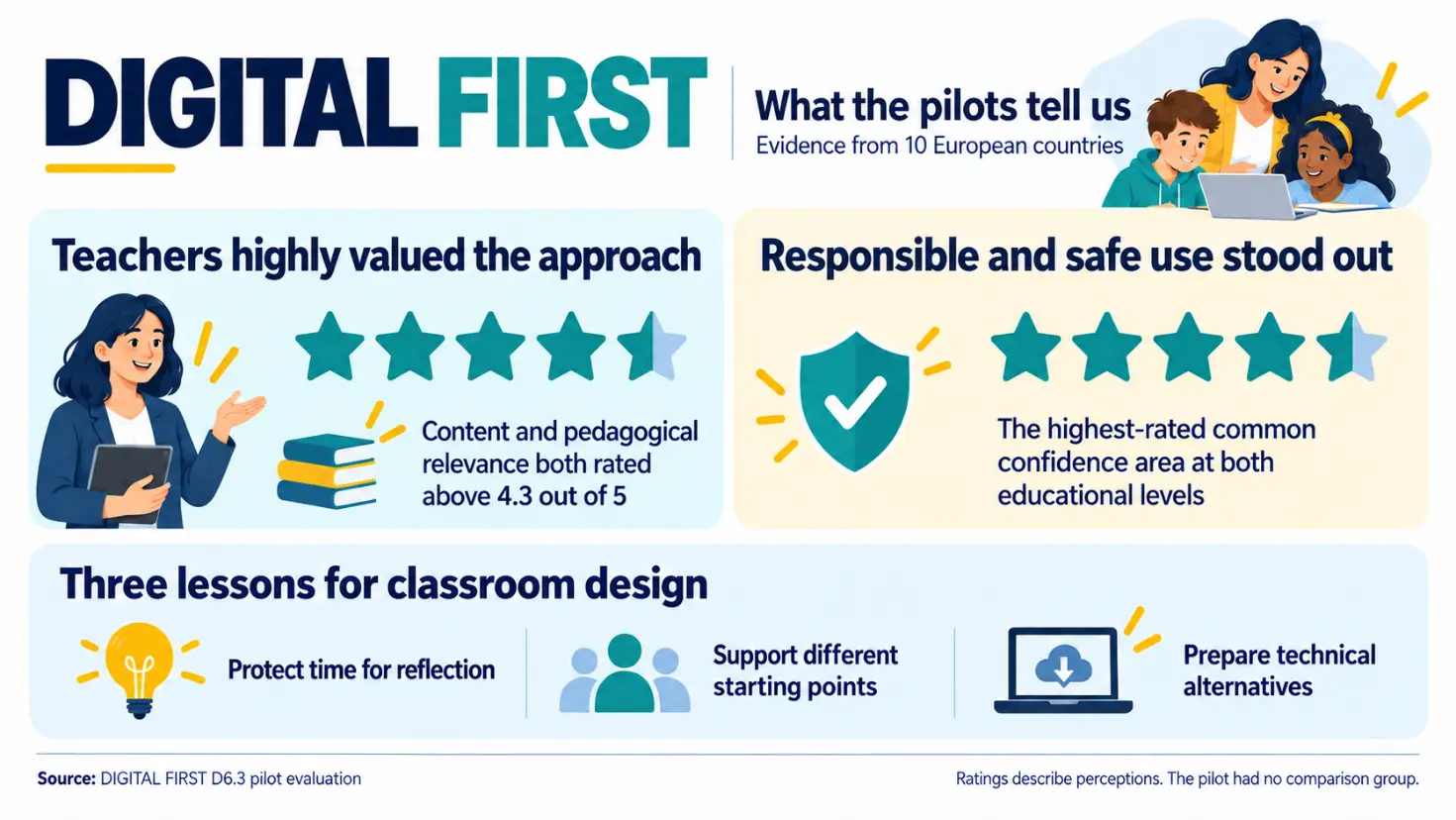
This semester, we are piloting the functional approach to teaching informatics in schools.
We are testing these ideas in real classrooms, together with teachers and students, learning what works, adapting, and improving.
Because real change does not happen in documents.
It happens in the classroom.
Looking ahead
Digital First is part of a wider European movement that is rethinking informatics education making it:
- more human
- more inclusive
- more relevant for new generations of learners
And this recognition confirms that we are moving in the right direction.
But more importantly, it motivates us to go further.