In today’s Bulgarian schools, digital devices are no longer an addition to the learning process—they are part of students’ everyday reality. Smartphones, tablets, online platforms, educational apps, and AI tools have transformed how young people access information, communicate, and study.
However, alongside these opportunities, schools are increasingly facing a growing challenge: screen dependency among students. For many young people, screens are present from the moment they wake up until they go to sleep. Learning, entertainment, social interaction, and even relaxation now happen through digital devices. The issue is not technology itself, but the absence of healthy boundaries and digital awareness. Excessive screen use is often linked to reduced concentration, sleep problems, lower physical activity, and difficulties in maintaining meaningful face-to-face communication. In the Bulgarian educational context, this challenge is particularly relevant. Schools are actively integrating digital tools and online learning environments, yet discussions about digital well-being often remain in the background. Students are taught how to use technology, but less often how to use it responsibly. This is where the concept of digital responsibility becomes essential. Schools should move beyond simply introducing more technology and instead help students develop healthier digital habits. This includes teaching learners to manage screen time consciously, distinguish between productive and passive device use, recognise digital distractions, and understand the impact of social media algorithms on attention and behaviour. Teachers also play a central role. By designing balanced lessons that combine digital resources with collaborative, offline, and movement-based activities, they can model healthier relationships with technology. Parents, too, should be included in this process, as digital habits are shaped both at school and at home.
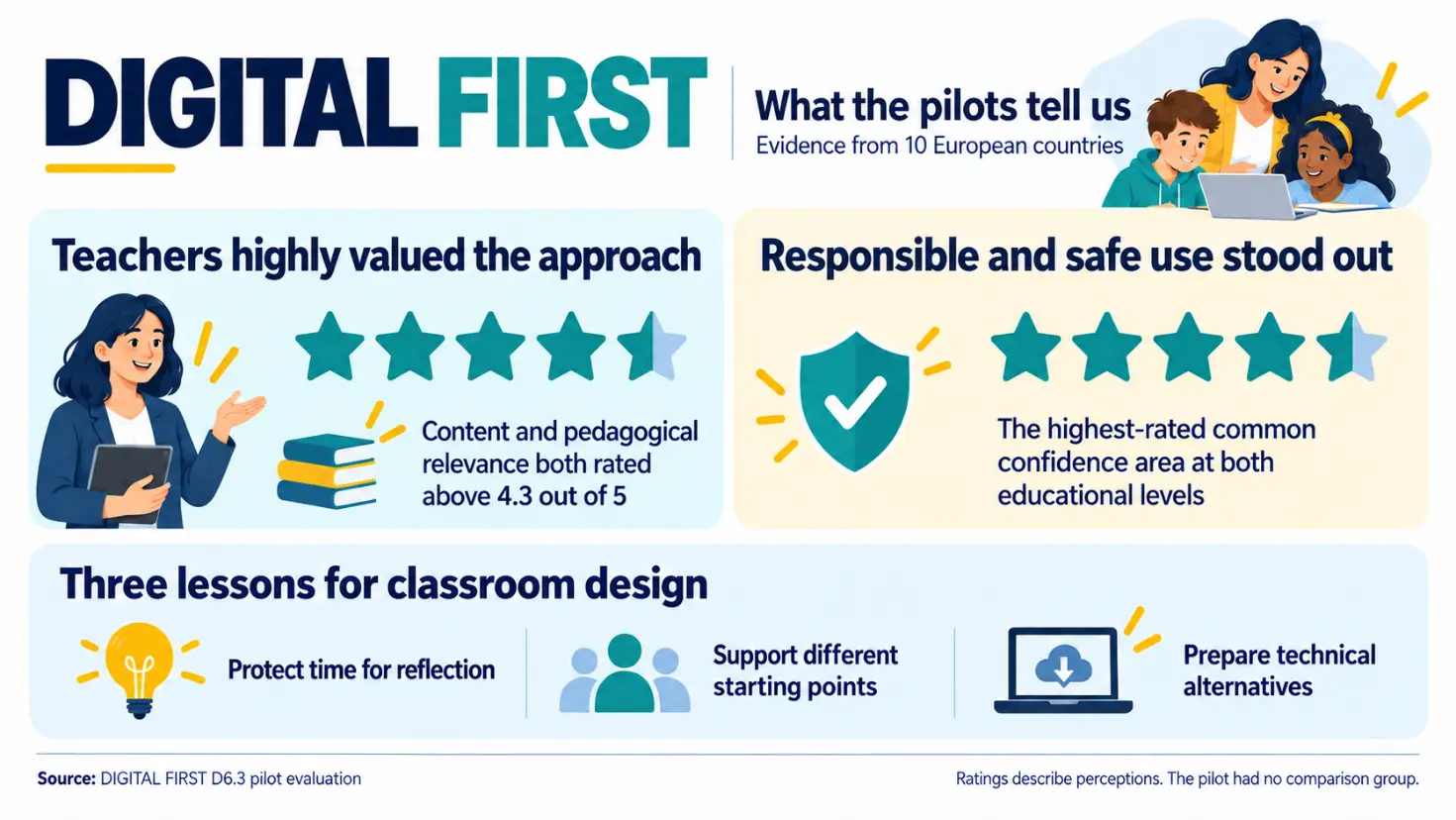
Projects such as Digital First highlight an important message: digital transformation in education is not only about access to technology, but about preparing students to navigate the digital world critically, safely, and responsibly. The future of education in Bulgaria is undoubtedly digital. The question is no longer whether students should use technology, but how they can do so in ways that support learning, wellbeing, and personal development. The goal is not less technology, but better technology habits—turning screen dependency into digital responsibility.