Researchers and educators from 16 countries explored how artificial intelligence, Bebras tasks and learning analytics can support the teaching and assessment of Informatics and Computational Thinking.
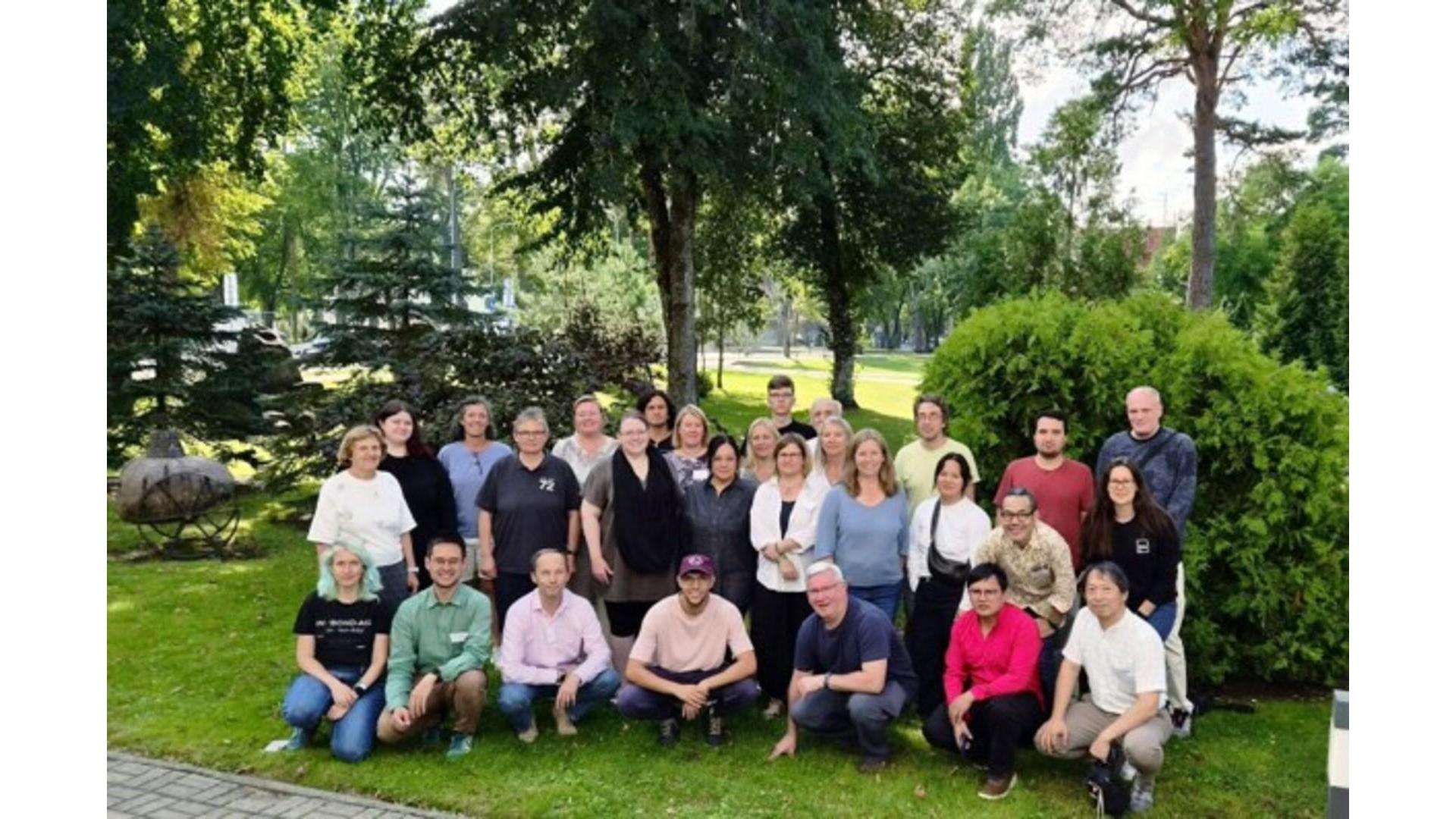
Learning analytics in Informatics is a topic of growing interest across the educational community, and artificial intelligence is opening up new opportunities for research and practice. Bringing these developments together, an international working seminar for Bebras-linked researchers and teachers was held in Druskininkai, Lithuania, from 22–29 August 2026.
Organised by Professor Valentina Dagienė of Vilnius University, the event combined Nordplus activities and the BeLLE network, focusing on the synergies between Bebras tasks and artificial intelligence. Participants from 16 countries came together to discuss existing research, explore new approaches, exchange educational practices and consider emerging research questions.
Learning analytics provided a common thread throughout many of the presentations. How can data from educational activities be transformed into meaningful knowledge? How can this knowledge help educators understand learners’ thinking, improve learning experiences and support the development of Informatics education?
These questions were particularly relevant to the discussions on the design, analysis and use of Bebras tasks.
Exploring the intersection of Bebras, AI and Informatics
The programme addressed several interconnected themes, ranging from the analysis of existing Bebras tasks to the role of AI in their creation and use.
Some highlights of over 20 presentations and sessions included:
- Auditing and curating existing Bebras tasks to identify Informatics and Computational Thinking concepts — Andrew Csizmadia.
- Findings from the Bebras literature review — Diane Vassallo.
- The role of AI in the Bebras task workflow — Andrew Csizmadia.
- AI-Assisted Creation of Bebras Tasks — Milan Rajkovic.
- Teaching with AI: Tools and Techniques for Educators — Vaida Masiulionytė-Dagienė.
Together, these contributions explored how AI can support the development, review and adaptation of educational tasks, while keeping the underlying Informatics and Computational Thinking concepts at the centre.
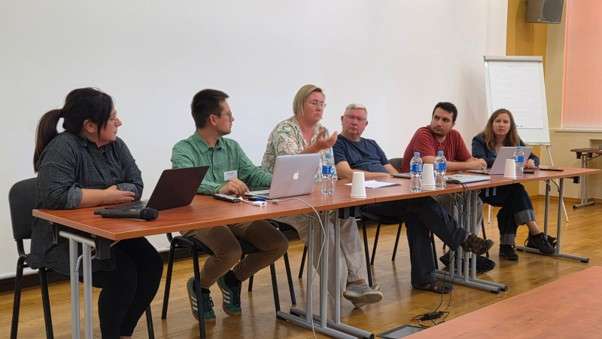
Panel discussion: AI in the Bebras task workflow
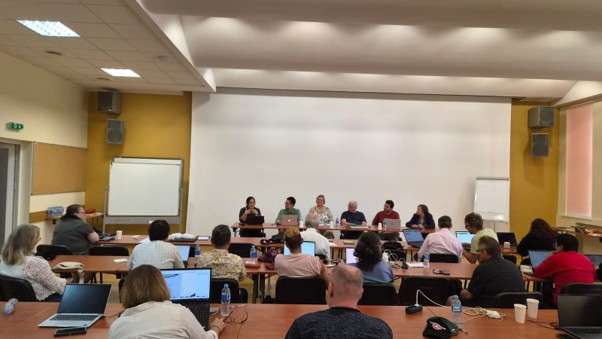
A highlight of the seminar was a panel discussion bringing together perspectives from researchers, Bebras coordinators and educators across partner countries.
The panel featured Mohsen Asgari from Linköping University; Sébastien Combéfis from the Ministère de la Fédération Wallonie-Bruxelles (MFWB); Andrew Csizmadia FBCS from Birmingham Newman University; Lidia Feklistova from the University of Tartu; Vaida Masiulionytė-Dagienė from Vilnius University; and Diane Vassallo from the University of Malta.
Building on presentations about AI in the Bebras task workflow and AI-assisted task creation, the panel explored how artificial intelligence can support the design, review and adaptation of Bebras tasks.
The discussion also considered broader questions: What does AI mean for the way Computational Thinking is taught and assessed? How can educators ensure that AI-supported processes remain pedagogically meaningful? And how can the growing availability of educational data contribute to a deeper understanding of learners’ thinking?
The exchange highlighted the importance of connecting technological possibilities with educational expertise, research evidence and the needs of teachers and learners.
From conference discussions to the Digital First Learning Analytics Handbook
Alongside the seminar activities, Finnish and Lithuanian teams were working intensively on the forthcoming launch of the Digital First Learning Analytics Handbook, an EU-wide resource designed to support understanding and application of learning analytics in education.
The seminar’s discussions provided a timely opportunity to reflect on the handbook’s broader themes and their relevance to Informatics education.
From a learning analytics perspective, several important insights emerge.
First, educational data becomes valuable when it is connected to meaningful learning processes. Bebras tasks offer opportunities to examine how learners approach Informatics and Computational Thinking challenges. Analysing responses and task characteristics can contribute to a better understanding of the concepts involved and the learning processes they may reveal.
Second, AI can extend the possibilities of educational analysis and task development, helping educators and researchers explore patterns, review content and generate new task ideas. However, AI-generated outputs require human expertise, pedagogical judgement and careful validation.
Third, learning analytics should support educational decisions rather than simply produce more data. The ultimate purpose is to help teachers understand learners’ needs, reflect on teaching practices and design more meaningful learning experiences.
Finally, international collaboration is essential. Bringing together researchers, educators and national Bebras communities makes it possible to compare experiences, discuss different educational contexts and develop shared approaches to learning analytics.
The Druskininkai conference demonstrated how the Bebras community can contribute to these discussions by connecting Informatics education, Computational Thinking, AI and data-informed practice.
As the Digital First Learning Analytics Handbook approaches its launch, these conversations reinforce a shared ambition: turning educational data into knowledge that supports better teaching and learning.
Data, knowledge and collaboration — for better learning.