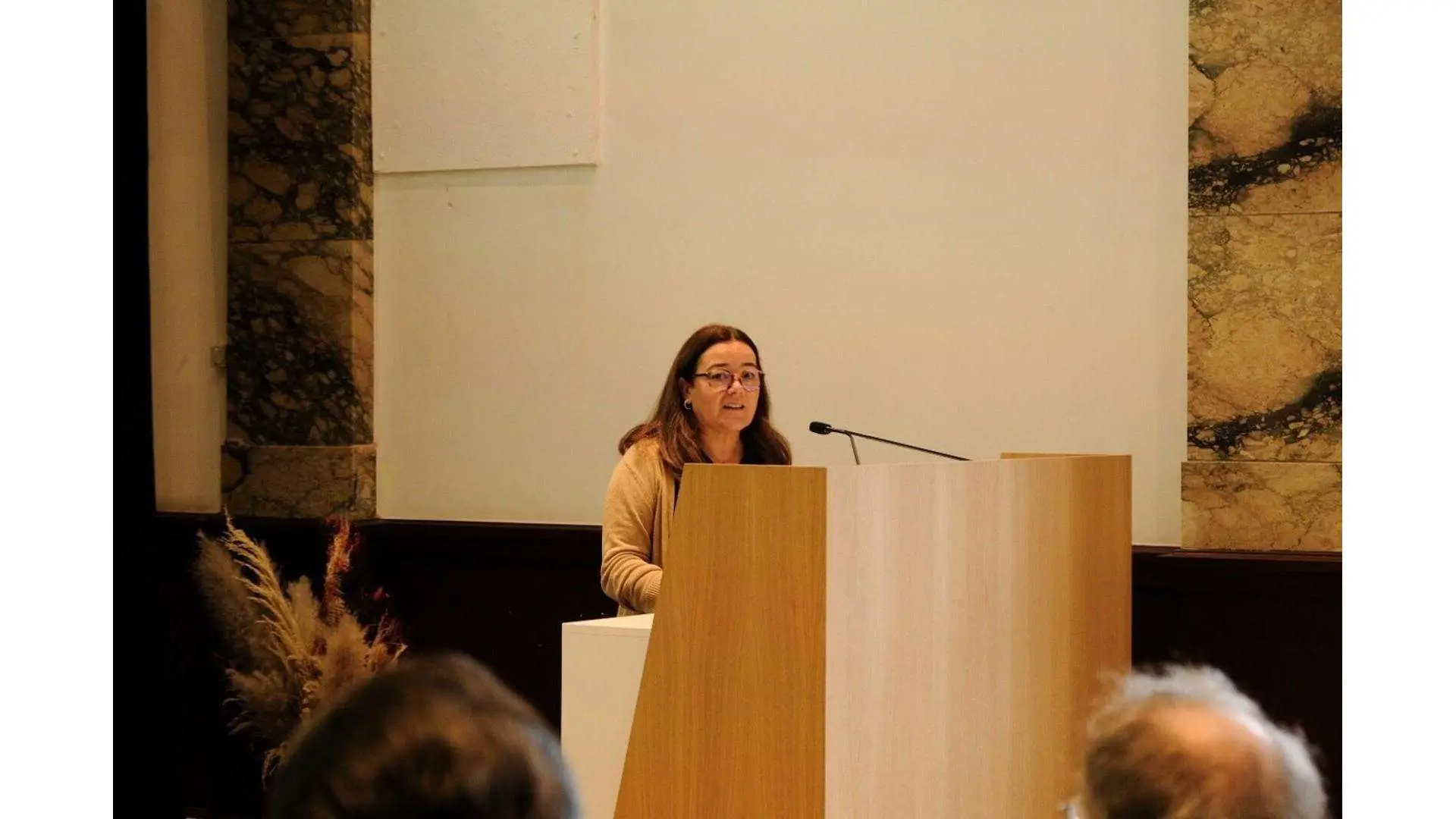

One of the highlights of the Digital First Final Event in Brussels was the keynote address delivered by Fernanda Bonacho, UNESCO Chair in Communication, Media Information Literacy and Citizenship.
Over the course of an hour, Fernanda Bonacho offered both a compelling conceptual framework and concrete perspectives on what it truly means to educate in the digital age. Her address explored the central role of educators in fostering critical thinking and media literacy among learners, arguing that these are not optional extras but they are at the very heart of it.
A recurring theme was the gap between how much media literacy is discussed and how little it is actually integrated into European school curricula. In a world where students are constantly navigating digital content — news, social media, AI-generated information and more — the ability to analyse, question and interpret what they encounter is necessary, an essential life skill. And yet, structured media literacy education remains absent from most school programmes across Europe.
Fernanda Bonacho made a powerful case for changing this: media literacy must become a core and permanent part of school curricula, not a standalone module or an occasional lesson, but a thread woven throughout the learning experience from an early age.
Participants were clearly moved by the address. Many cited it as one of the most memorable moments of the day, praising the clarity of delivery and the direct relevance of the themes to their everyday professional practice.