The transformation of informatics education requires more than just updated tools; it demands a profound shift in how we perceive digital technology in the classroom. This was the guiding principle during the recent teacher training sessions organized by the University of A Coruña in collaboration with the Centro de Formación e Recursos (CFR) of Ferrol. Throughout these intensive sessions, a group of dedicated Spanish educators embarked on a journey to redefine informatics, moving away from a traditional structuralist perspective, often limited to the mechanics of syntax and isolated coding, toward a functionalist approach that treats digital technology as a living language for expression and problem-solving. To bridge the gap between theory and practice, the training was centered on original materials developed within the DIGITAL FIRST framework, specifically testing Learning Scenarios designed to exercise the Representational and Imaginative functions of technology. By working directly with these new pedagogical resources, teachers explored informatics through the lens of information evaluation, media literacy, and creative automation, providing them with a concrete foundation to evaluate the methodology’s impact on student development.
Empowering Digital Natives
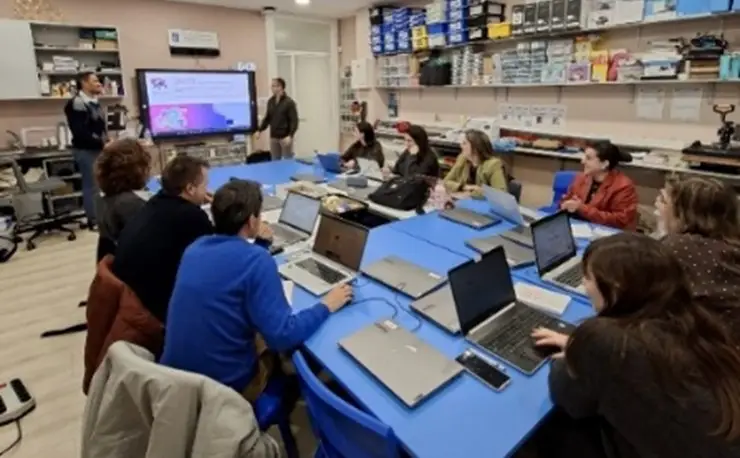
The atmosphere in the classroom at CFR Ferrol was one of collaborative discovery, where the “Learning by Doing” methodology allowed teachers to experience firsthand the pedagogical scenarios they would soon implement with their students. By engaging with these materials, participants explored how technology serves as a representational bridge to describe and interpret the world.
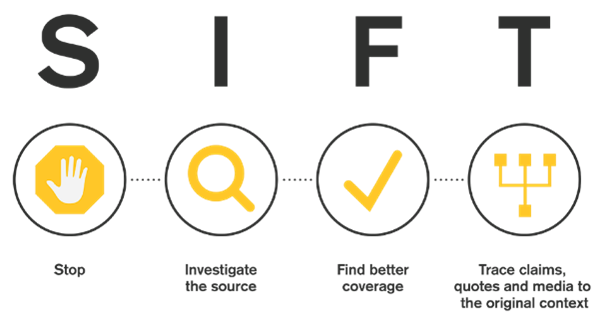
One of the most significant reflections during the training emerged from the media literacy activities, where educators utilized the SIFT (Stop, Investigate, Find, Trace) protocol and the CRAAP (Currency, Relevance, Authority, Accuracy, Purpose) test to navigate the complexities of digital information. This experience underscored that informatics is not just about technical proficiency, but about empowering students to become critical thinkers who can discern truth from misinformation in an increasingly saturated digital landscape.
As the training progressed, the focus shifted toward the imaginative and creative possibilities of digital tools. The educators delved into the design of automated environments and smart systems, discovering that the logic of programming can be a powerful vehicle for storytelling and personal expression. This narrative-driven approach resonated deeply with the participants, who observed that framing technical concepts within meaningful, real-world contexts makes the learning process more intuitive and engaging for digital natives.
Training Outcomes and Impact
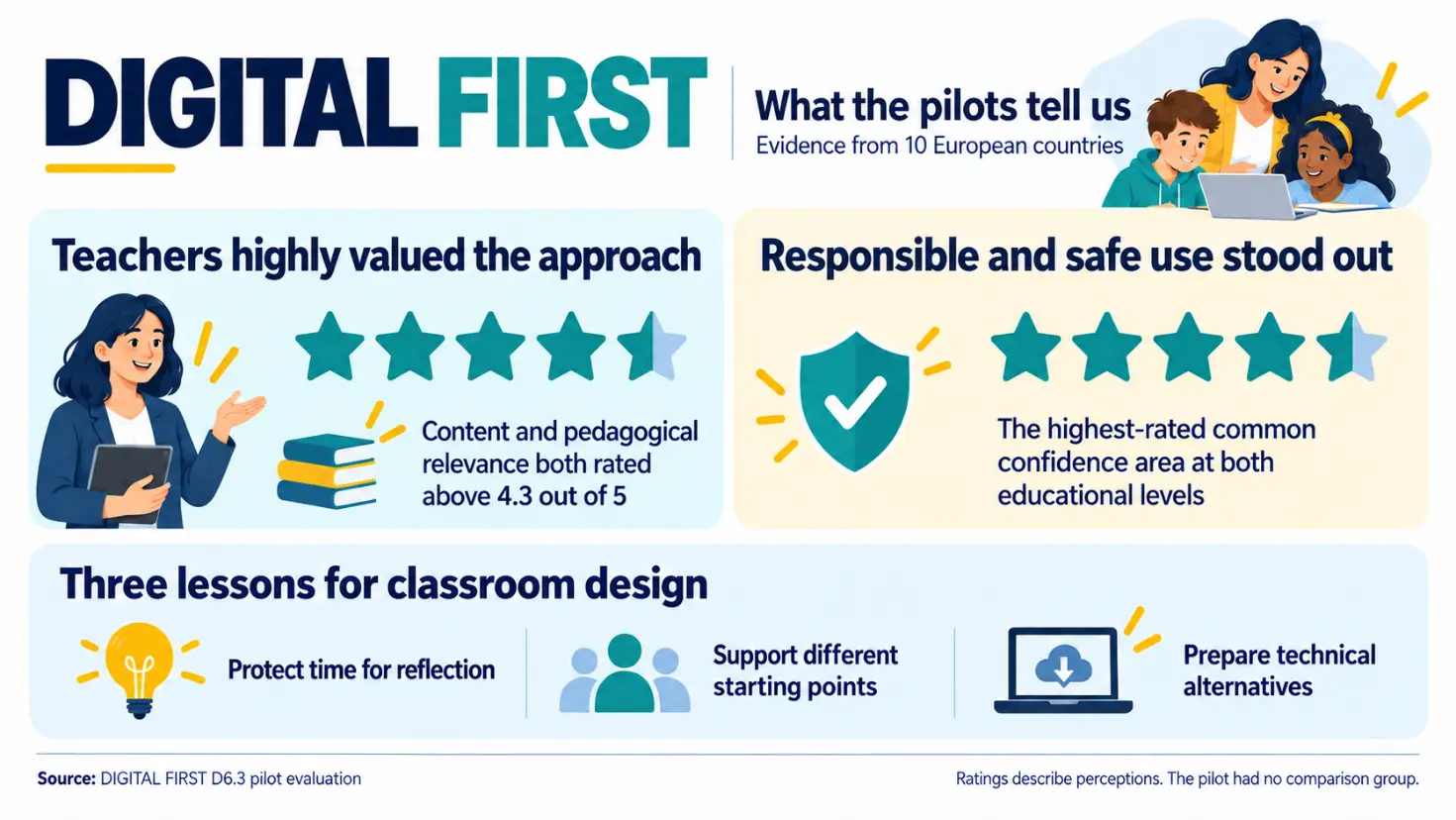
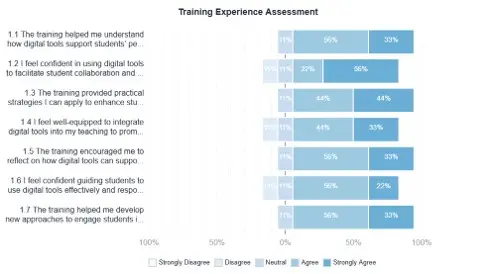
The feedback collected through the training assessment mechanisms provided a clear validation of this innovative direction. Educators expressed a high level of satisfaction with the materials, noting that the functionalist framework offers a more holistic and inclusive way to teach informatics, which is particularly vital for encouraging diverse participation in the field. While the qualitative discussions also touched upon the practical challenges of classroom time management, there was a unanimous consensus on the value of the new strategies acquired. The high percentage of positive responses regarding the training’s impact on professional development confirms that these teachers are now uniquely prepared to lead the upcoming pilot phase.
The training concluded with the implementation of the Digital Portfolio as a reflective tool, ensuring that both teachers and students can document their progress throughout the project. By adopting the project’s specific vocabulary and focusing on the “functions” of technology rather than just an instrumental approach, the Spanish consortium has established a solid foundation for the next stages of DIGITAL FIRST. These educators are no longer just instructors of a technical subject; they have become strategists of a new digital literacy that prepares the next generation to inhabit and shape the digital world with purpose and responsibility.