On September 25–26, 2025, the Vilnius University Šiauliai Academy in Lithuania hosted the biannual event “Kompiuterininkų dienos” (Computer Scientists’ Days), gathering enthusiasts of informatics, education, and technology from across Lithuania (https://www.liks.lt/en/coda-2025/).
This two-day event has become a vital platform for dialogue among researchers, educators, and technology professionals passionate about enhancing informatics education and promoting digital innovation in schools.
Exploring the Digital Challenges of Today
The conference program showcased the vast scope of contemporary digital transformation, with sessions and discussions addressing topics such as artificial intelligence, robotics, programming education, data analytics, cybersecurity, and legal responsibilities in the digital era.
The event began with a plenary session, where participants were welcomed by Professor Renata Bilbokaitė, Director of Vilnius University Šiauliai Academy. Also delivering welcoming addresses were Justinas Švėgžda, Vice Mayor of Šiauliai City, and Edita Grigaliauskienė, General Director of the Šiauliai Chamber of Commerce, Industry, and Crafts. Following the opening speeches, the plenary session continued with presentations highlighting the latest research findings, technological innovations, and educational initiatives that underscore Lithuania’s active role in the global digital education community.

At the conclusion of the plenary session, Professor Valentina Dagienė from Vilnius University and Marika Parviainen, a doctoral researcher at the University of Turku in Finland, presented two ongoing research projects focused on informatics and mathematics education in schools. The speakers introduced the Erasmus+ project DIGITAL FIRST and the Lithuanian Research Council-funded project “DigiMaths4All,” which aims to advance mathematics and informatics education through research and innovation.
In her presentation, Professor Dagienė outlined the main objectives of the DIGITAL FIRST project, stressing the importance of enhancing informatics teaching methods and promoting computational thinking as a universal skill for all students. DIGITAL FIRST is a transnational initiative involving eleven partner countries, seeking to redefine informatics as a foundational literacy of the 21st century. The project aims to create curriculum frameworks, teaching materials, and teacher training programs to make informatics accessible, engaging, and relevant to every learner, ensuring that the new generation develops digital fluency, critical thinking, and responsible usage of technology.
After an engaging discussion and networking break, the event proceeded with parallel thematic sessions featuring presentations on AI applications, improving school-level informatics, cybersecurity education, and robotics in learning. These sessions provided a platform for educators and experts to share practical experiences, discuss challenges, and explore innovative teaching approaches for integrating informatics into various stages of education.
Second Day: Collaboration with Schools
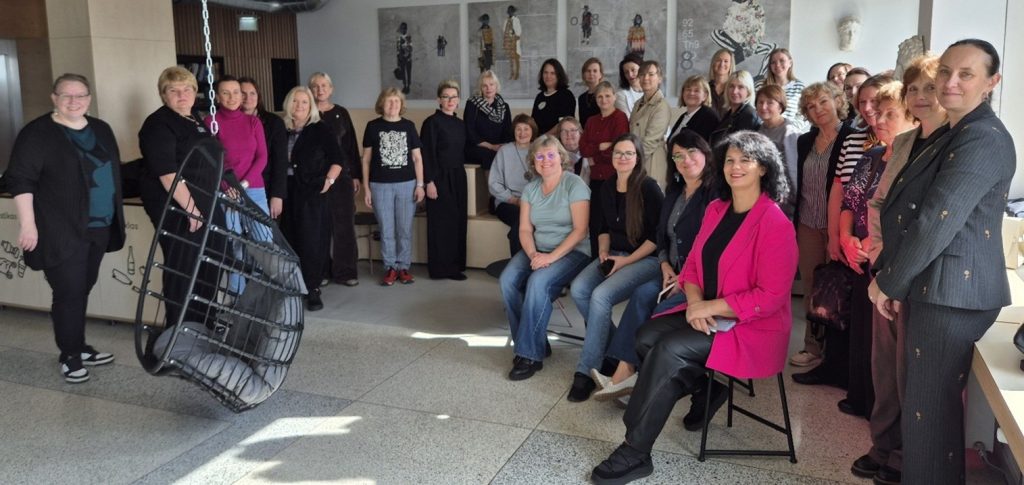
The second day of the conference was dedicated to a special session on the “DigiMaths4All” project, which focused on educational research and practical collaboration with schools from the Šiauliai region and beyond. More than sixty participants took part in the discussion, including school leaders, primary school teachers, and educational specialists from various cities and districts in Lithuania. In addition to representatives from Šiauliai schools, participants also included members from institutions such as Kuršėnai Pavenčiai School-Multifunctional Centre, Kaunas Jonas and Petras Vileišis School, Tauragė “Šaltinis” and Martynas Mažvydas Progymnasiums, as well as Klaipėda “Saulėtekis”, Kelmė “Kražantė”, and Prienai “Revuona” schools.
The discussions focused on the teaching of informatics and computational thinking in primary education. They highlighted the importance of early engagement and teacher support in developing digital competence from the earliest years of schooling.
Building a Deeper Informatics Education
The event in Šiauliai highlighted the increasing significance of informatics as a fundamental aspect of future education. Lithuanian educators are advancing initiatives like DIGITAL FIRST and DigiMaths4All, which aim to strengthen the connection between research and classroom practice. These efforts are focused on ensuring that digital education is inclusive, innovative, and future-oriented.
As Professor Valentina Dagienė stated, “Digital technology is no longer just a subject; it is a language that every learner should be able to speak fluently and confidently.”