Local and regional NGOs play a vital role in promoting education, STEM, and digital skills in their communities. Yet, many smaller organizations are unsure how to get involved in international projects or leverage EU initiatives to grow their impact. The Digital First project provides a clear example of how local associations can meaningfully contribute to transnational partnerships while developing their own capacities.
During two recent study visits to Algebra University, representatives from Croatian STEM-focused associations had the opportunity to learn how NGOs can actively participate in EU-funded projects. The sessions showcased Digital First as a concrete example, highlighting how partner associations like Partners in learning from Croatia and All Digital from Belgium have taken leading roles in work packages, coordinated activities across partners, and contributed to innovative outputs.
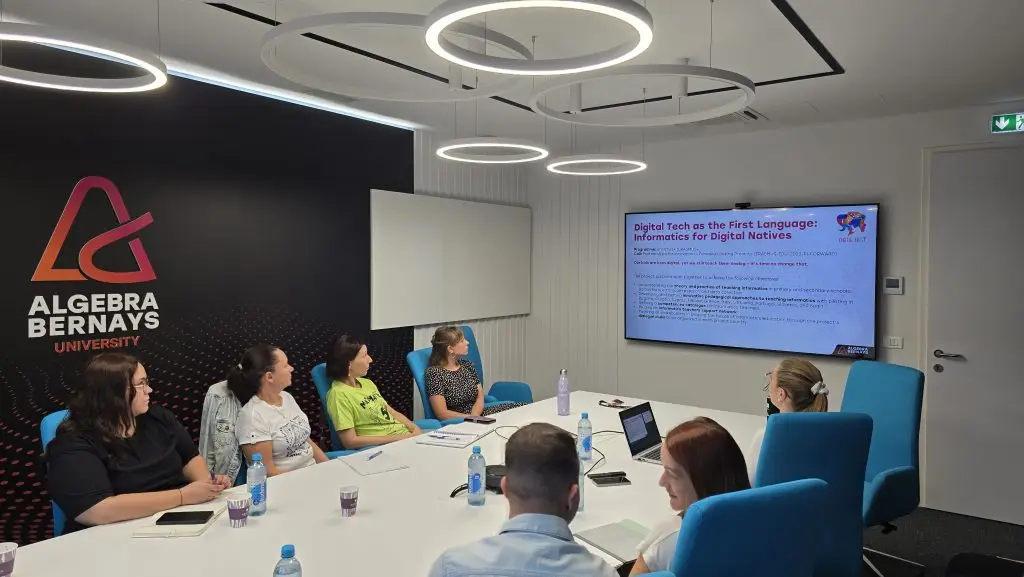
Participants discovered the wide range of tasks NGOs can undertake: from preparing operational guides and work plans for certain project activities, such as Dialogue Clubs in the case of the Digital First Network project, to coordinating some consortium activities, producing deliverables, and preparing final recommendation reports. These examples demonstrated that NGOs can play central roles in projects, influencing outcomes and shaping impactful initiatives.
The sessions were highly interactive, encouraging participants to ask questions and explore practical ways to contribute to projects. Beyond project management, the Digital First project also illustrated how NGOs can enhance visibility and outreach. NGOs as partners responsible for communication and dissemination can produce and support other partners in creating audiovisual materials, videos, podcasts, and social media content to showcase the project’s work and amplify its results.
These experiences highlighted the dual benefit of participation: local associations not only support international projects but also gain valuable skills, expand their networks, and increase their visibility. By seeing concrete examples from Digital First, smaller NGOs were inspired to explore new opportunities for collaboration, innovation, and growth within EU-funded initiatives.
The Digital First project shows that when NGOs take an active role, they do more than support a project; they develop their capacity, contribute to meaningful educational innovation, and strengthen their communities, all while engaging at a European level.