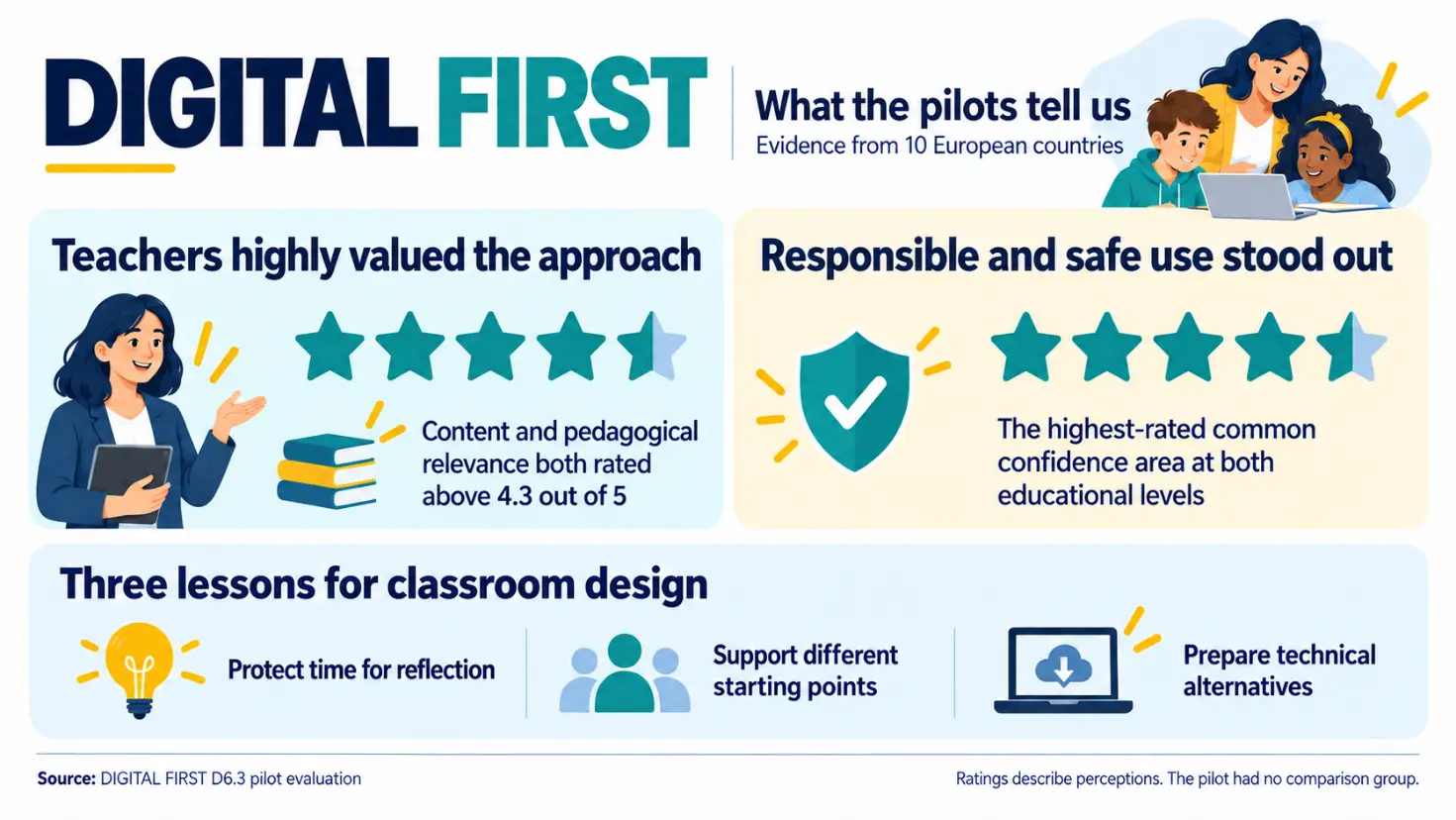
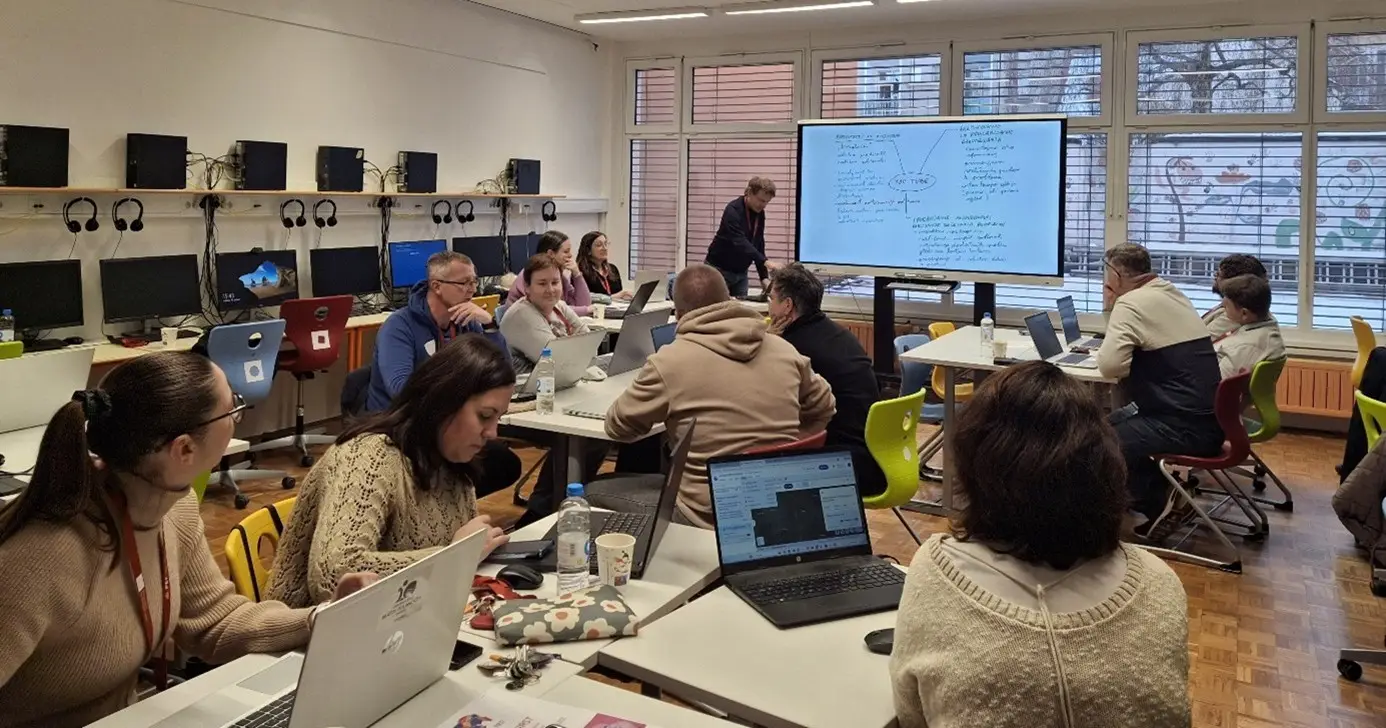
As part of the Digital First project, partner countries are preparing teachers to pilot newly developed teaching scenarios that support informatics education and digital competences. In Slovenia, this preparation took the form of an intensive, in-person teacher training that brought together theory, hands-on experimentation, and collaborative reflection among teachers. Thirteen Slovenian teachers gathered at Primary School Bratov Polančičev, Maribor, to take part in the teacher training for piloting, organised within the project. Over the course of a full day, participants explored two key dimensions of Digital First teaching scenarios: the imaginative function, which focuses on creativity and digital content production, and the heuristic function, which emphasises curiosity, problem-solving, and computational thinking.
The training was jointly delivered by the University of Ljubljana, Faculty of Education, in collaboration with Primary School bratov Polančičev Maribor and Primary School Toneta Čufarja Maribor, with a welcome address from the Ministry of Education of Slovenia. Choosing an in-person format proved to be a crucial decision, fostering an open, collaborative atmosphere and allowing teachers to learn not only from the materials but also from one another.
Learning together, in person
Rather than separating the two sessions into different days, the Slovenian team opted for a full-day training, with both sessions held consecutively. This structure supported continuity and deeper engagement, while also leaving space for informal conversations, networking, and reflection. Throughout the day, the atmosphere was described as positive, focused, and collegial. Teachers actively asked questions, shared classroom experiences, and worked together in small groups. The training combined short theoretical inputs with workshop-based activities, ensuring that abstract concepts were immediately connected to practical teaching situations. Organisers observed that the in-person format created a more “intimate” learning environment than an online session would have allowed. Teachers felt comfortable exchanging ideas, discussing challenges, and reflecting honestly on what works and what does not in their everyday practice.
Session 1: Imagination, creativity, and digital storytelling
The first session focused on the imaginative function, exploring how digital tools can support students’ creativity, expression, and digital content production. After a theoretical introduction, teachers moved quickly into hands-on activities designed to mirror the learning experiences their students would later encounter.
Working in small groups, participants explored digital tools that foster imagination and storytelling, including Pixton, Book Creator, Storybird, and Twine. Interestingly, teachers deliberately chose tools that were new to them, rather than relying on familiar platforms such as Scratch or Minecraft Education. This willingness to step outside their comfort zone set a strong tone for the day. Each group experimented with its chosen tool and then presented the results to the others, highlighting both strengths and challenges. While teachers appreciated the creative potential of the tools, they also raised an important practical concern: most of them are not available in Slovenian, which can be a barrier when working with younger students.
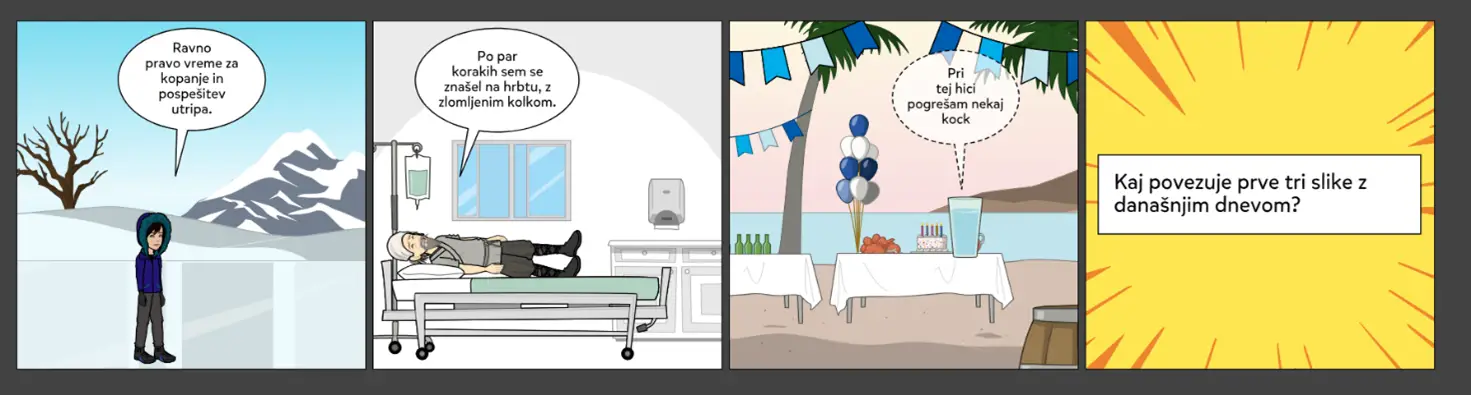
Beyond tools, much of the discussion focused on how to balance structure and freedom in creative digital tasks. Teachers shared concrete strategies from their classrooms, emphasising that students often benefit from clear starting points, minimal requirements, and realistic constraints. As one teacher explained, offering structured prompts can help students overcome the initial hurdle of “not knowing where to start”, while still leaving plenty of room for individual creativity. Others highlighted the importance of setting clear expectations, for example, specifying the number of characters or scenes in a Scratch project, and documenting the creative process through screenshots or photos.
Teachers also reflected critically on students’ current skill levels, noting challenges related to planning, emotional expression, empathy, and self-confidence. Several participants observed that students can be overly ambitious in their expectations, while simultaneously feeling dissatisfied with the results they produce. These reflections reinforced the value of imaginative digital activities that emphasise process, reflection, and gradual skill development rather than polished final products alone.
The session also included a joint analysis of primary and secondary school teaching scenarios developed within imaginative function (Creativity and digital content production). Teachers generally agreed that the scenarios were well designed and aligned with the national curriculum, while also pointing out areas where adaptation might be needed, such as in heterogeneous classes or schools using block scheduling.
Session 2: Curiosity, problem-solving, and computational thinking
The second session shifted the focus to the heuristic function, examining how digital tools and teaching scenarios can support inquiry, research skills, and computational thinking. Again, the session began with a short theoretical introduction, followed by hands-on group work. Teachers explored tools aimed at fostering curiosity and problem-solving, including Code.org, Google Earth, Khan Academy, and YouTube. As in the first session, participants evaluated these tools critically, noting both their pedagogical potential and practical limitations, particularly the lack of Slovenian-language video guides and subtitles.
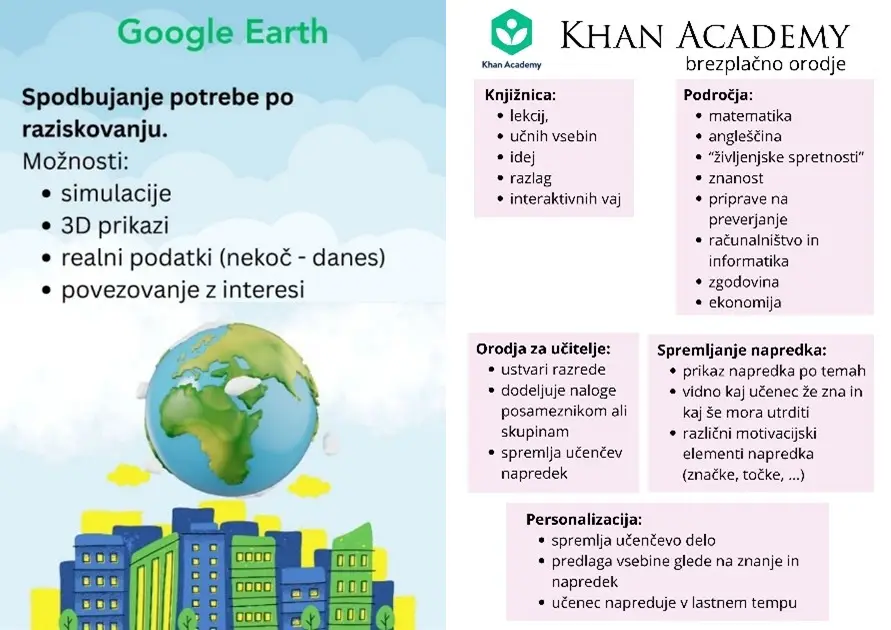
A central part of the discussion revolved around responsible research and information literacy in the digital age. Teachers shared strategies they use to help students evaluate sources, identify authors and publishers, and understand where information comes from. Several practical classroom techniques emerged, such as requiring students to write down full source links by hand or using analogies (for example, comparing Google Search to a library) to explain the difference between search results and sources.
Teachers also discussed challenges students face when searching for information, including the use of imprecise search terms and the tendency to copy links directly from search engines rather than original websites. These conversations highlighted the importance of explicitly teaching research skills as part of informatics and digital education.
As in the first session, teachers analysed primary and secondary school learning scenarios, this time from the heuristic function (Computational thinking and programming). While participants found the content interesting and relevant, they were honest about the need for adaptation. In particular, some lessons were considered intensive or too advanced for students’ current experiences, especially in lower grades. Teachers suggested adjusting pacing, simplifying materials, or implementing certain lessons in higher grades or more computer-oriented secondary schools.
Ready for piloting, ready to adapt
Across both sessions, a consistent outcome emerged: teachers felt better prepared, more confident, and more aware of what piloting Digital First teaching scenarios would involve. The training introduced new tools, clarified lesson structures, and created space for teachers to reflect critically on implementation in their own classrooms.
Feedback collected through a post-training questionnaire confirmed these impressions. Teachers evaluated both sessions positively, reporting that the training supported their understanding of how digital tools can enhance creativity, critical thinking, collaboration, and responsible digital behaviour. Participants particularly valued the practical strategies and opportunities for reflection, as well as the flexibility of the materials, which they felt could be adapted to different teaching styles and student needs. At the same time, teachers clearly articulated what would help them move forward. Their responses pointed to a need for additional examples of good practice, opportunities to observe or trial lessons, and ongoing professional support, whether through repositories of teaching scenarios, online communities, or collaboration with colleagues.
A strong foundation for the next phase
The Slovenian teacher training for piloting demonstrates how carefully designed professional development can bridge the gap between project outputs and classroom reality. By combining theory with hands-on experimentation and by valuing teachers’ practical knowledge and honest feedback, the training laid a strong foundation for the upcoming piloting phase. As Digital First moves forward, insights from Slovenia, alongside experiences from other partner countries, will provide a rich picture of how the teaching scenarios are piloted in diverse classroom contexts and what kinds of learning experiences they enable for teachers and students.