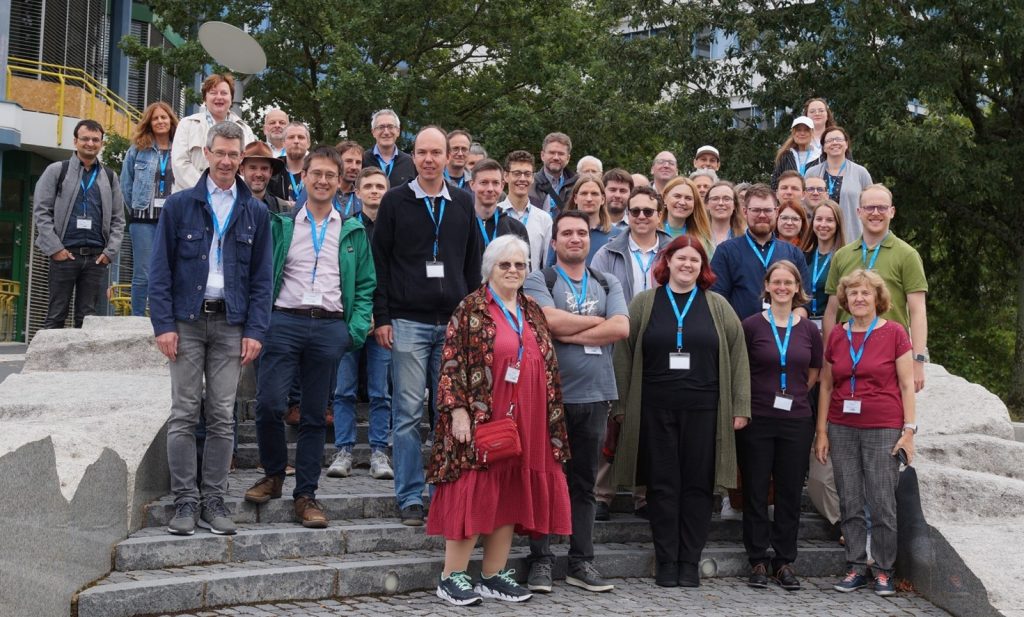
In September 2025, the historic city of Trier, Germany, hosted the 18th International Conference on Informatics in Schools: Situations, Evolution, and Perspectives (ISSEP). This prestigious annual event gathered leading researchers, educators, and policymakers from across Europe to discuss the effective integration of informatics into school curricula. Key topics included Computational Thinking (CT), digital literacy, and problem-solving.
A European Forum for Informatics Education
ISSEP 2025 provided a dynamic space for reflection and collaboration on the current state and future of informatics education in primary and secondary schools. The conference program featured keynote speeches, peer-reviewed paper sessions, a pre-conference Doctoral Consortium for emerging researchers, and hands-on workshops for teachers from local schools. These diverse activities aimed to strengthen the connection between educational research and classroom practice, ensuring that innovations in pedagogy and technology directly benefit learners.
Key themes discussed at the conference included:
- Curriculum development and core informatics concepts
- Teacher preparation and professional development
- Artificial intelligence and digital literacy
- Programming, problem-solving, and computational thinking
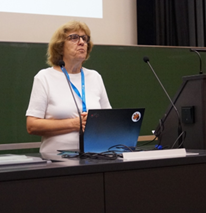
A major highlight of the conference was the keynote address delivered by Professor Valentina Dagienė from Vilnius University in Lithuania. She is a pioneer in informatics education in Europe and the founder of the Bebras Challenge for Computational Thinking. In her presentation titled “Informatics Education Across Europe: Emerging Trends, Challenges, and Personal Insights,” she explored how various European initiatives are transforming the way children learn informatics and Computational Thinking from an early age.
DIGITAL FIRST – Informatics as a New Literacy
Professor Dagiene’s keynote talk centered on the European project DIGITAL FIRST – Digital Tech as the First Language: Informatics for Digital Natives. This project is founded on a powerful concept: digital technology has become a “first language” for the new generation, influencing how young people think, communicate, and solve problems. As a result, the project aims to position informatics education as a fundamental literacy, akin to reading, writing, and mathematics.
The professor explained that DIGITAL FIRST seeks to develop innovative teaching approaches for informatics in both primary and secondary education. Instead of focusing solely on coding or the use of specific tools, the project advocates for a functionalist approach. This approach emphasizes the meaningful, creative, and ethical use of digital technologies to address real-world challenges. It conveys that informatics is not just about understanding computers; rather, it empowers students to become active participants in the digital world.
 DIGITAL FIRST seeks to create a unified pedagogical model by integrating various European experiences. This model is designed to assist schools across Europe in preparing students for life and work in a digital society. As Dagienė emphasized, “Increasing informatics knowledge and digital fluency should not be a privilege for a select few — it must become a universal competence, available to every learner from an early age.”
Other European Initiatives
In her keynote address, Dagienė discussed several initiatives that aim to strengthen informatics education:
- CT&MathABLE (Computational Thinking and Mathematical Problem Solving): This project focuses on integrating computational thinking into mathematics learning through an analytics-based learning environment.
- Reviewing CT in Compulsory Education: This initiative examines how computational thinking can be systematically incorporated across various school subjects.
- Nordplus Project: This project aims to develop learning paths for computational thinking through Bebras-like tasks with a focus on analytics, designing progressive learning trajectories based on engaging Bebras-style challenges.
- Together, these initiatives represent a collective European effort to build continuity and coherence in informatics education, ensuring that learners can transition smoothly from playful exploration to a deeper conceptual understanding.
A Shared Vision for the Future
ISSEP 2025 highlighted the importance of collaboration, openness, and inclusivity in the field of informatics education. The conference showcased how partnerships among universities, schools, and initiatives like DIGITAL FIRST are transforming the educational landscape.
A clear message emerged from Trier: informatics is for everyone in schools. It is no longer a niche subject for specialists; rather, it has become a vital part of general education—essential for fostering creativity, critical thinking, and active participation in the digital world.
As the field continues to evolve, ISSEP remains a key event, leading the way toward a more connected and informed Europe—one where every student can effectively engage with digital technology.
All accepted papers are published by Springer in the Lecture Notes in Computer Science series, and open-access materials are also available on Zenodo. For more information about ISSEP 2025, visit https://issep2025.uni-trier.de. You can access the papers at https://link.springer.com/conference/issep.