In primary education, computer science is often introduced through engaging tools and interactive environments. However, an important question remains: are students only learning how to use these tools, or are they developing knowledge they can actually apply? This distinction lies at the core of what we call functional learning.
Functional learning in computer science goes beyond understanding individual commands or completing predefined tasks. It focuses on using knowledge to solve problems, adapting solutions to new situations, and understanding why something works. In this sense, programming is not the goal itself, but a tool for thinking, creating and solving.
Within the Digital First project, this perspective becomes especially relevant. The aim is not only to introduce digital tools into the classroom, but to ensure that students develop meaningful and transferable skills. In practice, this raises an important consideration: can commonly used environments such as Scratch, Minecraft Education and Micro: bit support this kind of learning?
Each of these tools is widely used in schools, but its true value becomes clear when viewed through a functional lens.
Scratch is often the first environment where students encounter programming. Its visual structure allows them to focus on logic rather than syntax, which makes it highly accessible. At first glance, students may appear to simply create animations or simple games. However, the key lies in how tasks are framed.
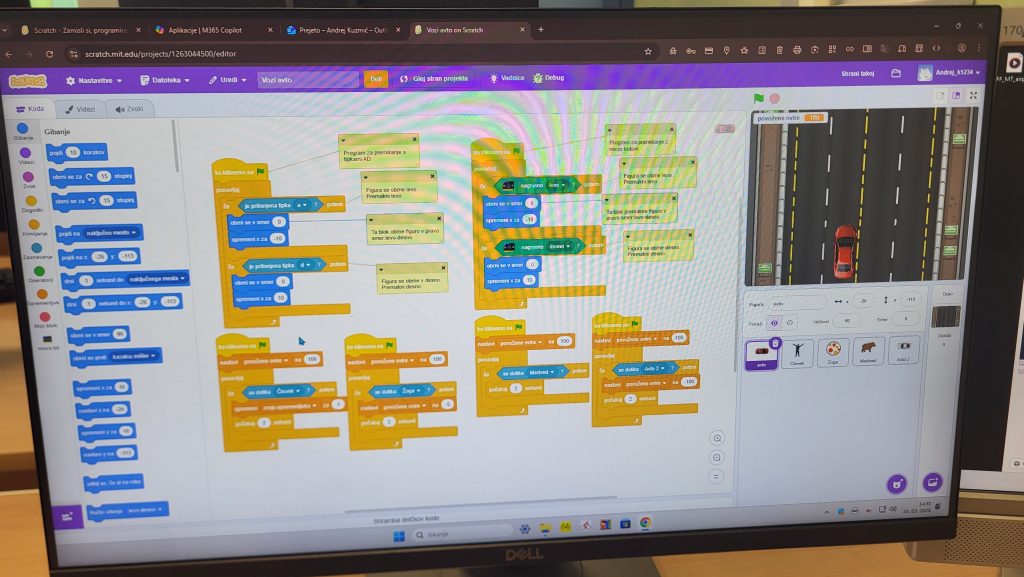
For example, instead of asking students to use a loop, they are given a problem: how can we make a character move continuously without repeating the same instruction multiple times? In this situation, the loop becomes a solution rather than a requirement. Students begin to understand that programming helps simplify processes and make them more efficient.
A similar shift happens when students create a simple game. They are not just placing blocks together, but thinking about interaction. What happens when the player touches an object? How do we track points? Why does something not work as expected? Through these questions, students naturally engage in debugging and logical reasoning.
In this way, Scratch supports functional learning by connecting programming concepts with clear purposes. Students are not learning loops, conditions or variables in isolation, but as tools to achieve something meaningful. At the same time, the creative nature of Scratch allows for multiple solutions, which encourages exploration and independent thinking.
While Scratch builds a strong foundation, it remains limited to a two-dimensional digital environment. Students understand logic, but they may not yet fully grasp how these ideas apply in more complex or realistic contexts. This is where Minecraft Education offers a valuable extension.
In Minecraft Education, programming becomes part of a dynamic world. Students are no longer working with abstract objects, but with space, structure and movement. This changes the nature of the problems they encounter.
One example from classroom practice involves building a house using code. Instead of constructing it manually, students are challenged to automate the process. The task is not simply to build, but to think about how to structure the building efficiently. Where does the building start? How do we repeat certain elements? Can we reduce the number of commands?
Students quickly realize that writing code allows them to simplify complex tasks. A wall can be built using repetition, a roof requires planning of layers, and symmetry becomes an important consideration. The focus shifts from the final result to the process behind it.
In such tasks, functional learning becomes visible. Students are solving a concrete problem, making decisions and improving their solutions. Some may write longer sequences of commands, while others discover more efficient approaches. This naturally leads to comparison and reflection, which deepens understanding.
Another important aspect of Minecraft is motivation. Students are highly engaged, which increases their willingness to experiment. They test ideas, make mistakes and try again. This iterative process is essential for developing problem-solving skills.
However, engagement alone is not enough. Without clear guidance, students may focus only on visual outcomes. The teacher’s role is therefore crucial in directing attention to the underlying logic. Questions such as “How could you make this faster?” or “Can you reduce the number of steps?” help shift the focus back to functional thinking.
While Minecraft connects programming with a meaningful environment, Micro:bit takes the next step by linking it to the physical world. This is often where students begin to see the full relevance of what they are learning.
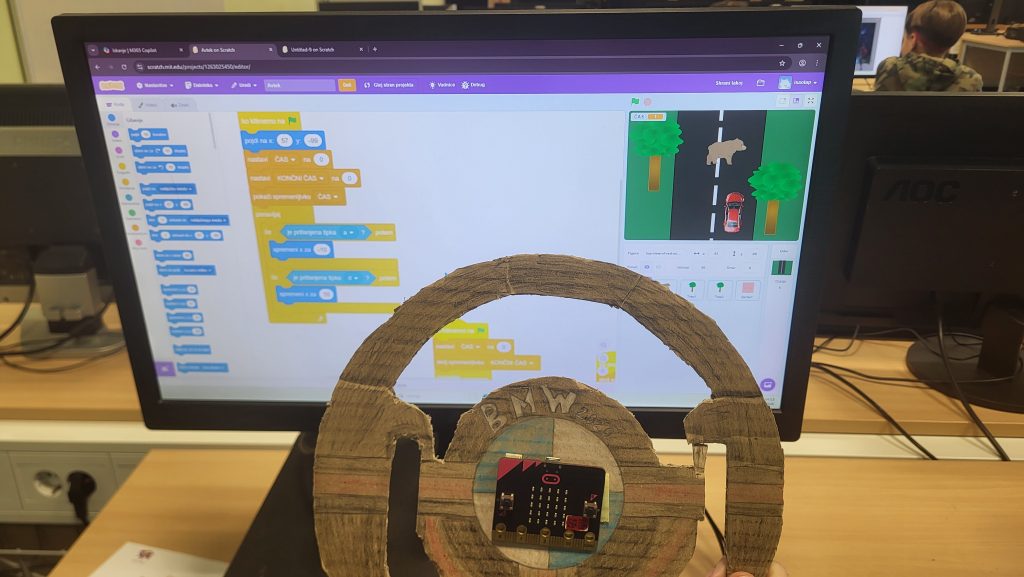
Using Micro:bit, students can create simple devices that respond to input and produce output. A program can display information, react to movement or communicate with another device. This transforms programming from a screen-based activity into something tangible.
A common classroom example is creating a step counter. Students need to detect movement, count repetitions and display the result. At first, this may seem straightforward, but it quickly becomes a problem-solving task. How do we ensure that each step is counted only once? What happens if the device is shaken? How do we reset the counter?
Through such questions, students develop a deeper understanding of how their code interacts with real-world conditions. They begin to see that programming is not only about writing instructions, but also about anticipating situations and refining solutions.
Micro:bit also introduces a sense of responsibility. When something does not work, the result is immediately visible. This encourages students to think carefully about their code and test it systematically. The learning process becomes more deliberate and reflective.
When looking at Scratch, Minecraft Education and Micro:bit together, a clear progression emerges. Scratch introduces the basic logic of programming in a simple and accessible way. Minecraft provides a context where these ideas are applied to more complex and meaningful problems. Micro:bit connects everything to real-world applications.
This progression supports functional learning because it moves from understanding to application and finally to real-world relevance. Students do not remain at the level of abstract knowledge. Instead, they gradually build the ability to use their skills in different situations.
From the perspective of the Digital First project, this combination addresses several key goals. Students develop digital competence not only by using tools, but by understanding and applying them. Learning becomes active, as students are constantly engaged in creating and improving solutions. The variety of environments also supports inclusion, as different students may respond better to different types of activities.
At the same time, this approach requires thoughtful planning. Functional learning does not happen automatically. Tasks need to be designed in a way that encourages problem solving rather than simple repetition. The teacher plays an important role in guiding students, asking the right questions and helping them reflect on their work.
Assessment can also be more challenging. Instead of focusing only on correct answers, it becomes important to observe how students approach problems, how they adapt their solutions and how they explain their thinking. This requires a shift in perspective, but it also provides a more accurate picture of what students actually understand.
In conclusion, Scratch, Minecraft Education and Micro:bit can effectively support functional learning in computer science, but only when used with a clear purpose. They are not just tools for learning programming, but environments where students learn how to think, solve problems and apply knowledge.
When combined, they create a learning experience that moves from play to purpose. Students begin by exploring simple ideas, continue by applying them in engaging contexts, and finally connect them to real-world situations. This journey reflects the core idea of functional learning and aligns closely with the goals of modern education.
In this sense, the question is no longer whether these tools are suitable for teaching computer science, but how we use them to ensure that learning remains meaningful, transferable and relevant for students’ future.