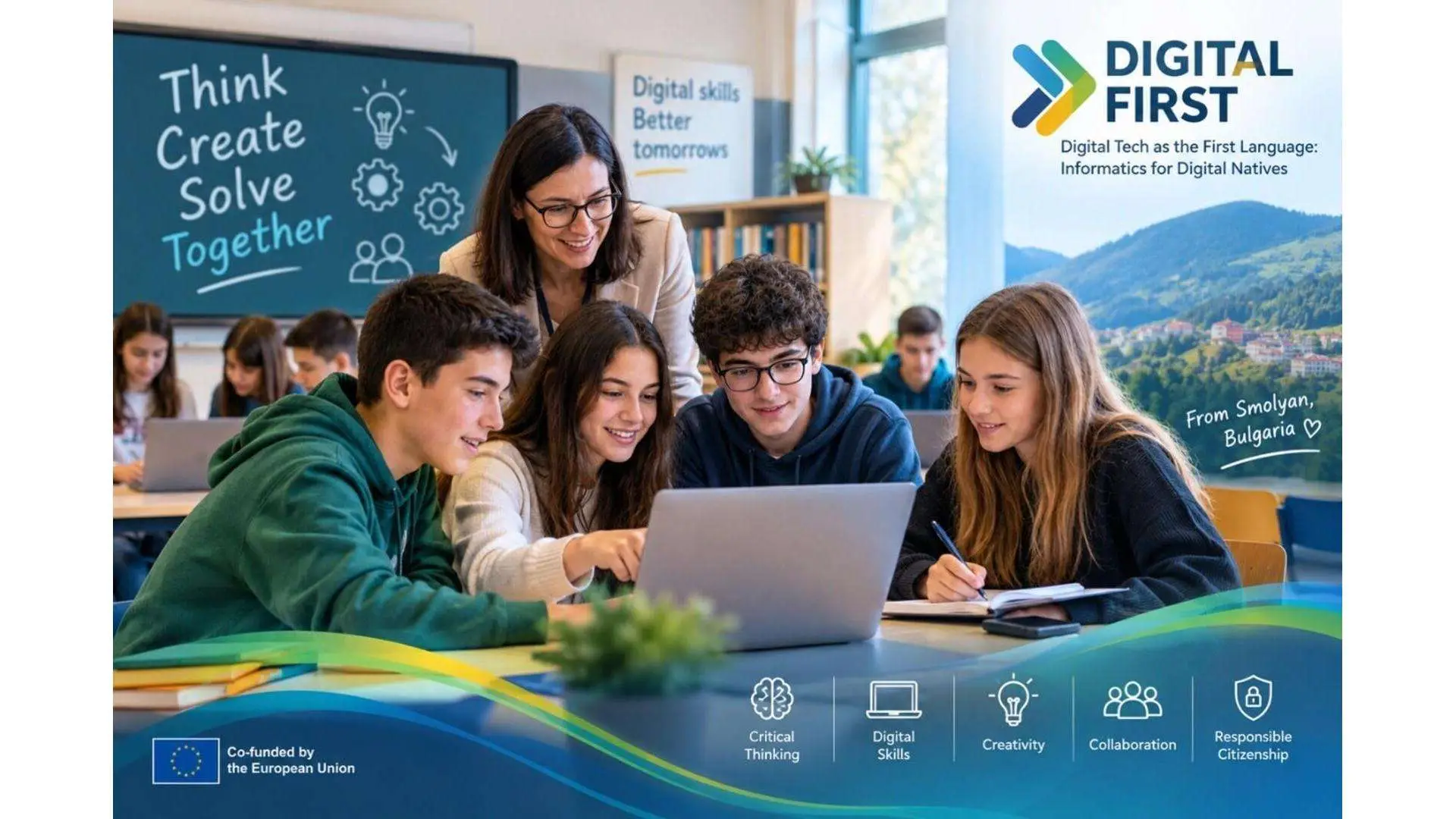
Young people today grow up surrounded by digital technologies. They use smartphones, social media, online platforms and artificial intelligence in their everyday lives. However, being a digital native does not automatically mean knowing how technology works, evaluating information critically or using digital tools effectively to solve problems. In a rapidly changing digital world, students need more than technical skills — they need the ability to think independently, make informed decisions and use technology creatively and responsibly.
This is the challenge addressed by DIGITAL FIRST – Digital Tech as the First Language: Informatics for Digital Natives, a European project bringing together 15 partners to rethink informatics education in primary and secondary schools. The project aims to make digital learning more meaningful, practical and relevant to students’ everyday lives and future needs.
From using technology to creating with it
DIGITAL FIRST promotes a functional approach to informatics education, shifting the focus from technical knowledge alone to the meaningful application of digital skills in real-life situations. Instead of simply learning how to use digital tools, students are encouraged to investigate, experiment, collaborate and create. Through practical activities, they can develop computational thinking, creativity, problem-solving skills and the confidence to approach unfamiliar challenges.
The project’s learning scenarios have been piloted in ten European countries, including Bulgaria, providing opportunities to explore how this approach can work in different educational contexts. Bulgarian students and teachers have contributed to this shared effort to make digital learning more engaging, interactive and connected to real-life situations.
A Bulgarian perspective: Digital learning in a mountain community
At Secondary School “St. St. Cyril and Methodius” in Smolyan, Bulgaria, participation in DIGITAL FIRST has strengthened the importance of connecting digital education with the real needs of students and the local community. In a mountain region where opportunities for modernisation can be limited, developing digital competences is particularly important for ensuring that young people have the skills and confidence to participate fully in an increasingly digital society.
For our school, digital education is not simply about introducing new devices or applications into the classroom. It is about encouraging students to think critically, work collaboratively, explore ideas and use technology to create meaningful outcomes. By combining digital tools with active, student-centred learning, teachers can help learners become more independent, creative and responsible. The experience gained through European cooperation also offers valuable opportunities to exchange ideas, reflect on teaching practices and bring new perspectives into everyday classroom work.
Critical thinking in the age of AI
Artificial intelligence and online platforms offer exciting opportunities for learning, communication and creativity. At the same time, they raise important questions about reliability, privacy, security and responsible use. Students need to learn not only how to use these technologies, but also how to question the information they receive, recognise potential risks, distinguish reliable sources from misleading content and understand the limitations of AI-generated results.
Teachers play a crucial role in this process. By creating supportive learning environments where students can ask questions, test ideas, exchange opinions and learn from mistakes, educators help young people become more independent and responsible digital citizens.
Preparing learners for the future
DIGITAL FIRST highlights an essential principle: the goal of digital education is not simply to prepare students to use technology, but to empower them to understand it, think critically, develop creative solutions and contribute responsibly to society.
As technology continues to transform the way we live, learn and work, schools have an important role in preparing students to face new challenges with curiosity, confidence and an open mind. This requires learning experiences that combine digital competence with collaboration, creativity, critical thinking and responsible decision-making.
The future belongs not only to those who can use digital technologies, but to those who can think critically, create meaningfully and solve problems with them.
DIGITAL FIRST supports this vision by encouraging educators and students across Europe to rethink informatics education and build the skills needed for a more informed, creative and responsible digital future.