Valentina Dagienė, Vilnius University, Lithuania
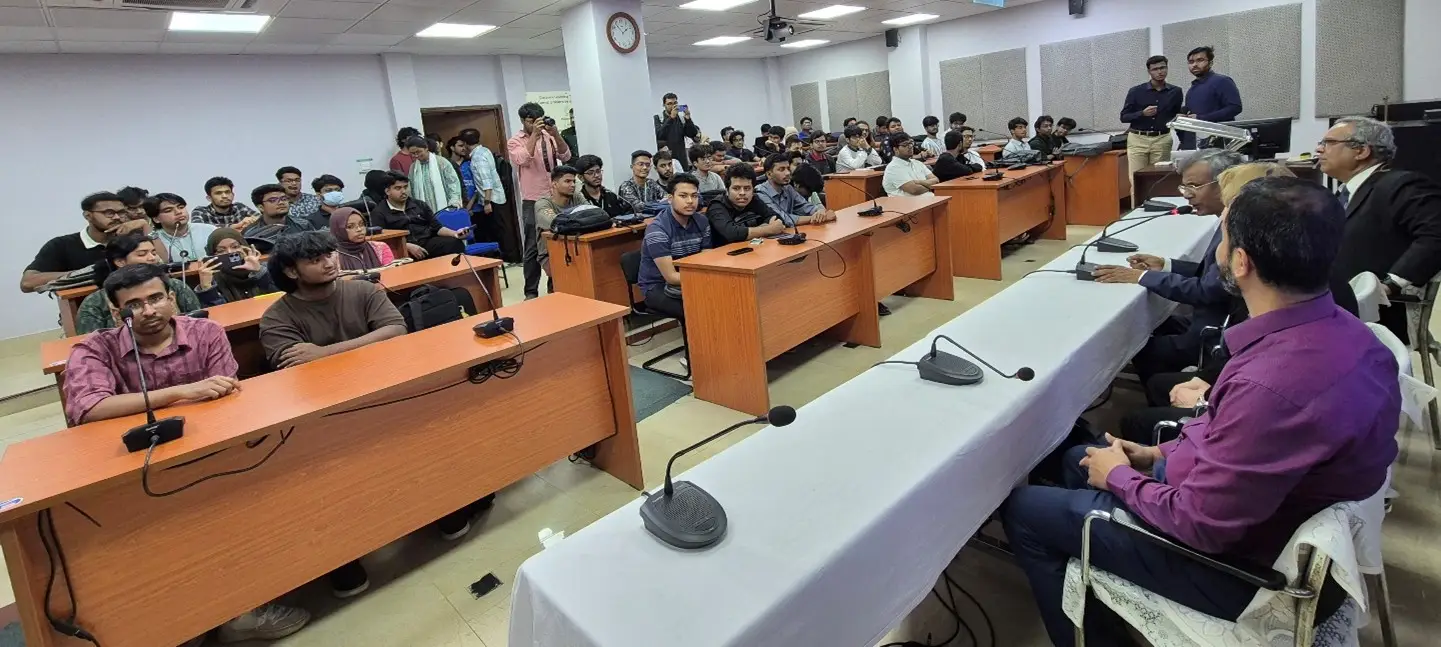
As part of an Erasmus-funded academic mobility project, the DIGITAL FIRST project was actively promoted across Bangladesh through visits to 11 universities in Dhaka and Barishal. These visits provided a valuable opportunity to engage with students, researchers, and academic staff while sharing the project’s vision and its emphasis on computational thinking, problem-solving, and informatics/computing education, especially by highlighting the results of an informatics education study conducted across 10 countries.
The lectures and interactive sessions highlighted the growing importance of Computational Thinking (CT) as a key skill in modern education systems. Participants were introduced to leading European research trends in informatics education, including innovative teaching methods that integrate inquiry-based learning, creativity, and problem-solving. The DIGITAL FIRST project was showcased as an example of how research and educational practice can work together to improve digital skills and create meaningful learning experiences in schools.
Particular attention was given to how CT can support not only technical skills but also broader cognitive abilities such as abstraction, decomposition, and algorithmic reasoning. Discussions emphasized how these competencies are increasingly vital for learners navigating complex, technology-rich environments. The sessions also demonstrated how DIGITAL FIRST contributes to this field by developing research-based approaches and tools to enhance informatics education.
The students’ response was very positive and engaging. Participants showed strong interest in the topics presented, actively participating in discussions and asking insightful questions. Many were especially curious about Erasmus and other European Union initiatives in education, international collaboration opportunities, and ways to get involved in computing education research. These interactions displayed a shared enthusiasm for improving informatics education and a clear desire to build academic connections beyond national borders.
Beyond student engagement, the visits fostered meaningful discussions with university faculty members. These exchanges created opportunities to consider common challenges and priorities in informatics education, including curriculum development, teacher professional development, and the integration of emerging technologies such as artificial intelligence into teaching and learning. Comparing European and Bangladeshi educational contexts provided valuable insights into both differences and shared goals, especially regarding digital transformation and capacity building.
Beyond formal presentations, the mobility experience promoted meaningful intercultural exchange and mutual learning. Interacting directly with diverse academic communities enhanced understanding of global perspectives in computing education and emphasized the importance of collaboration when tackling educational challenges.
Overall, the dissemination of DIGITAL FIRST in Bangladesh greatly boosted the project’s international visibility. More importantly, it helped forge connections between European and South Asian academic communities, laying the foundation for future cooperation. Such efforts are vital in advancing informatics education research worldwide and in promoting computational thinking as a key skill for learners in the 21st century.