
As part of the implementation of the Digital First pilot project, three school clusters in the Porto district, in Northern Portugal: Aver-o-Mar School Cluster, Campo Aberto School Cluster, and D. Afonso Sanches School Cluster, have been carrying out activities with students from different educational levels throughout the 2nd and 3rd school terms. These initiatives demonstrate high levels of engagement, participation, and development of essential digital skills.
At the Aver-o-Mar School Cluster (Póvoa de Varzim), a dedicated channel was created within the Informatic team on Microsoft Teams to support the implementation and monitoring of the project. Following the project presentation and the completion of the pre-pilot questionnaire, Scenario 3 – Digital Security and Privacy (Regulatory Function) was launched.
The pilot, developed by teacher Carlos Mendonça (Aver-o-Mar School Cluster) with a 6th-grade class in Informatics and Citizenship Education subjects, was completed during the 2nd school term. According to the teacher, the content “proved to be a valuable contribution to consolidating learning,” highlighting student interest, active participation, and the sharing of personal experiences related to the topics addressed.
The use of digital tools such as online forms, videos, and SeguraNet materials, as well as the creation of a Padlet, contributed to strong student engagement. Students showed enthusiasm for participating in a project with a European dimension. The teacher also emphasised the importance of initiatives like this in promoting greater harmonisation of Informatics education across Europe.
At the Campo Aberto School Cluster, according to teacher Sara Santos (Campo Aberto School Cluster), the project is also underway. After an introductory session and the collection of informed consent from parents/guardians, Scenario 10 – Digital Citizenship, Ethics and Collaboration was introduced to a 5th-grade class (lower secondary level).
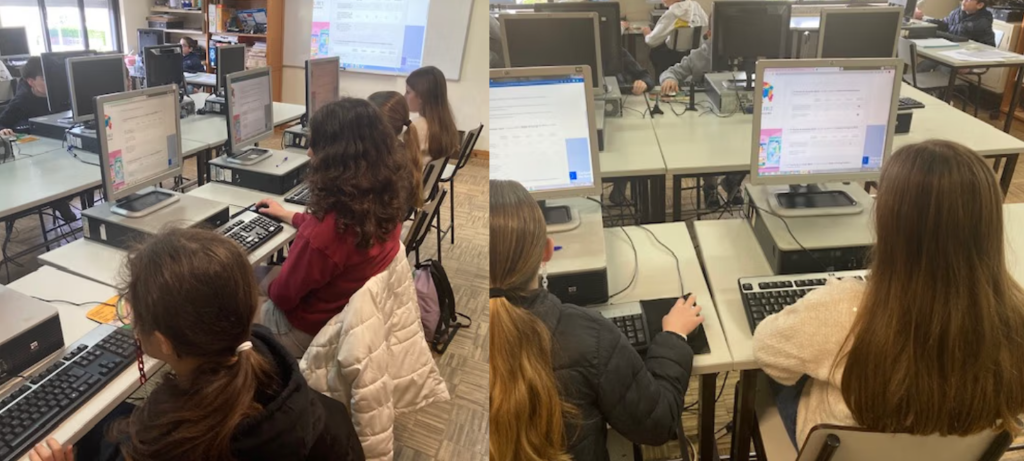 Pilot at primary class in Campo Aberto School Cluster
During the first session, held in March 2026, students participated in the activity “Digital Guardians: Share, Respect and Protect”, creating digital posters with online safety rules and responsible digital behaviour guidelines. According to Sara Santos, “students showed great commitment and actively engaged in the proposed activities.” The second session is scheduled for the 3rd school term.
In parallel, Scenario 3 – Digital Security and Privacy is being finalised with a 9th-grade class (lower secondary level), through a collaborative initiative between two school cluster teachers – David Pires (Aver-o-Mar School Cluster) and Roberto Carvalho (Campo Aberto School Cluster). The activities focused on risks associated with online sharing and managing privacy.
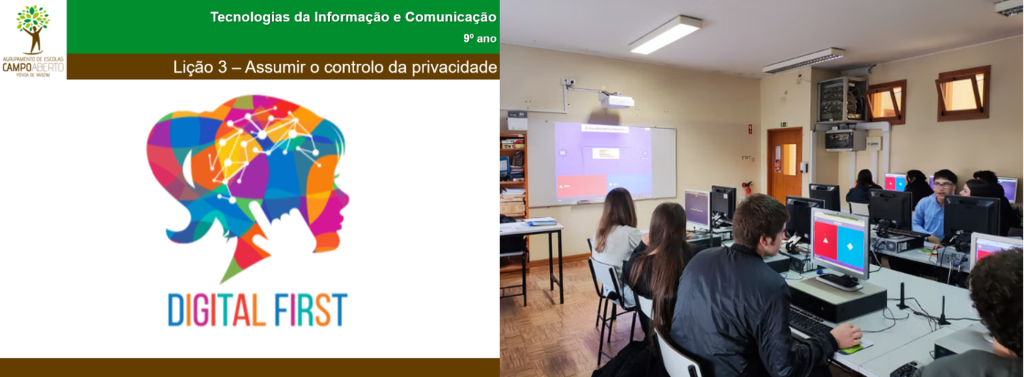 Pilot at secondary class in Campo Aberto School Cluster
According to teacher Sara Santos, the contents are “relevant, up-to-date and appropriate for the students’ age group,” although some time management adjustments were needed for more extensive activities. Nevertheless, students demonstrated strong interest, commitment and active participation throughout the sessions.
At the D. Afonso Sanches School Cluster (Vila do Conde), the project implementation at upper secondary level is progressing consistently. According to teacher Ana Raquel (D. Afonso Sanches School Cluster – AEDAS), two of the four planned sessions have already been completed, with “high levels of student interest and active participation.” The remaining sessions, scheduled for the 3rd school term, will further reinforce the importance of digital literacy in students’ education.
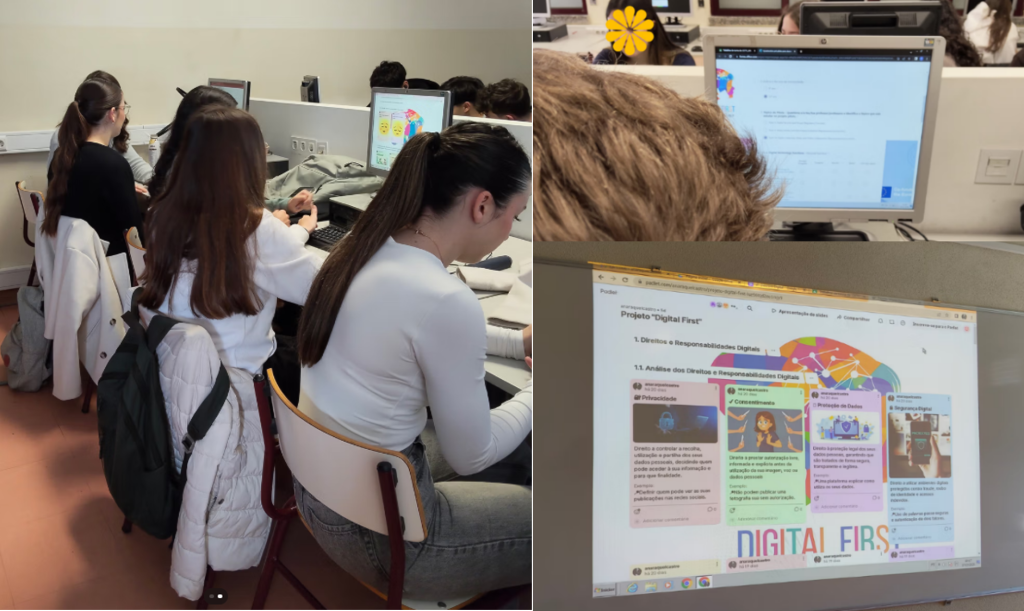
Pilot at secondary class in D. Afonso Sanches School Cluster
Within the activities developed under Scenario 3, particular emphasis was given to the concept of digital footprint, developed by teacher David Pires (Aver-o-Mar School Cluster). This included the creation of a collaborative digital mural (“Our Digital Footprint”), analysis of fictional digital profiles, and guided reflection on online behaviour. Students actively engaged in discussions and group work, demonstrating analytical thinking and self-reflection skills.
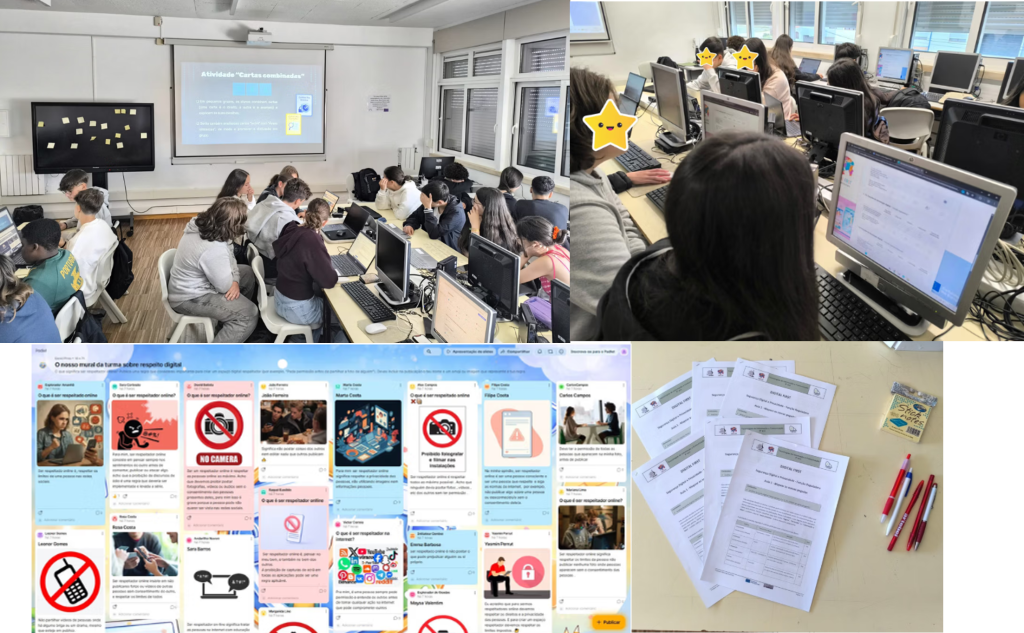
Pilot at secondary class in Aver-O-Mar School Cluster
Overall, teachers’ testimonies show that the Digital First project is making a significant contribution to the development of digital competences, particularly in the areas of online safety, digital citizenship and critical thinking, while simultaneously promoting student engagement and cross-curricular collaboration.
The pilot implementation is being monitored through questionnaires administered before and after the pilot phase, with the post-pilot questionnaires to be applied throughout June.
This work forms part of a broader European effort to promote digital literacy under the Erasmus+ Digital First programme. In Portugal, the partner of this consortium is CFAE-PVVC – Training Centre for Schools Association of Póvoa de Varzim and Vila do Conde, which manages and delivers teacher training across these two municipalities.