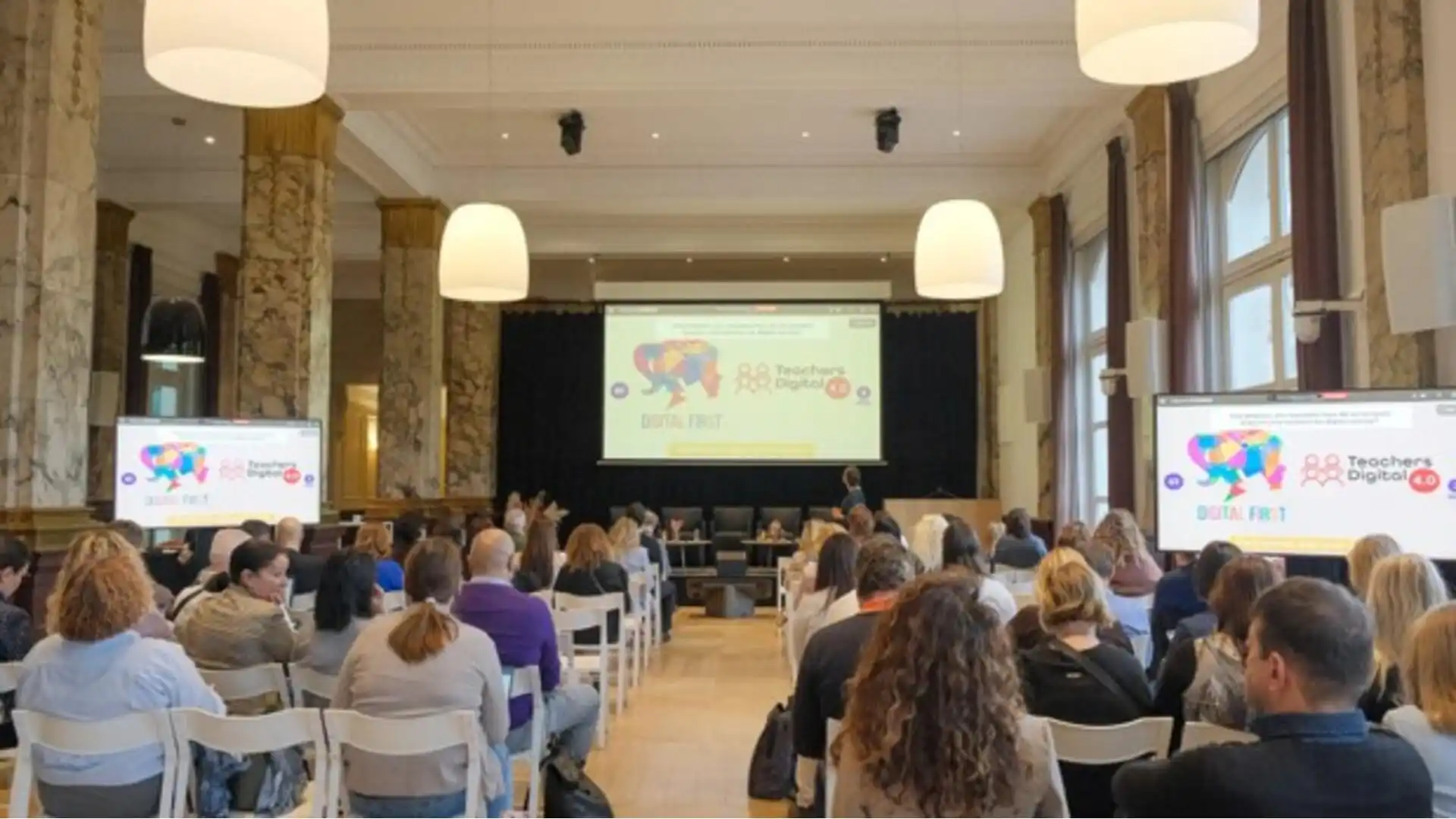
To conduct a comparative analysis of the results from the Italian pilot, it is essential to provide a general overview of the pilot itself. The experimentation phase of the European project DIGITAL FIRST serves as the fundamental operational and analytical juncture for validating the functional approach to teaching informatics in primary and secondary schools. In terms of project governance, the pilot phase and the associated data modelling are situated at the intersection of two key Work Packages: WP6 (“Practice makes perfect: piloting and revising” – Lead Partner: UDC/University of A Coruña) and WP7 (“Data for success: modelling learning analytics for informatics” – Lead Partner: UTU/University of Turku).
The evaluation framework, structured within deliverable D6.3, pursues three primary strategic objectives: Assessing the impact on students—measuring, both quantitatively and qualitatively, the development of informatics skills, levels of self-efficacy, and the cultivation of a critical, confident attitude toward the use of technology; Evaluating didactic and pedagogical relevance for teachers—gathering feedback on the applicability of the functional approach in the classroom, the quality and flexibility of the provided teaching materials, and the growth of professional confidence in teaching informatics; and Examining the involvement and perceptions of families—identifying the impact—as perceived by parents—on students’ digital well-being, the transition away from passive consumption, and the prevention of critical issues such as screen dependency.
The evaluation methodology employed combines quantitative and qualitative approaches, ensuring robust analytical traceability and a direct alignment with the evidence gathered within national school settings and through observation sessions.
In Italy, the pilot activities took place at the IIS Ferraris-Pancaldo in Savona, a secondary school that served as the national pilot hub. The pilot was designed to provide an operational application of the “Dialogue Clubs” theoretical model—developed under WP3 (led by PIL/Passine-it)—which breaks down the teaching of computer science and the understanding of technology into seven key functions:
Personal: Expression of identity and the construction of a digital self.
Informational: Modeling, organizing, and structuring information.
Interactional: Communication and cooperation mediated by the network.
Instrumental: Using technology for the practical resolution of problems.
Imaginative: Artistic creation, storytelling, and the simulation of scenarios.
Heuristic: Guided research, critical inquiry, problem-solving, and the discovery of new knowledge.
Regulatory: Behavioral management, digital norms, safety, and adherence to rules.
At the IIS Ferraris-Pancaldo in Savona, the pilot’s pedagogical framework focused specifically on an in-depth exploration of the Heuristic and Informational functions. Students participated in laboratory-based activities centered on the critical analysis of sources, the formulation of heuristic questions, and the translation of complex data into representational structures (such as concept maps, flowcharts, and information architectures). The primary objective was to shift the student’s role from that of a passive consumer of platforms to an active agent capable of investigating the mechanisms underlying algorithms and data representation.
The qualitative and empirical findings from the Savona hub confirm the pedagogical validity of this functional approach to teaching. Structuring the modules around transparent objectives has led to a significant increase in student engagement and perceived self-efficacy, particularly when activities followed a four-part pedagogical cycle: Creating—the autonomous and collaborative development of structured digital artifacts; Experimenting—direct manipulation of data and hardware/software configurations (hands-on learning); Discussing—group deliberation on design choices and the heuristic strategies employed; and Reflecting—metacognitive decontextualization regarding the ethical and conceptual implications of the technology used.
The pilot implementation phase revealed—in Italy, as in other European countries—significant disparities in the technical readiness of educational institutions. Hardware and Network Accessibility: Unstable internet connections or highly restrictive network filters hindered the flexible use of learning platforms. Disparities in Device Provisioning: A shortage of individual devices or limited access to computer labs forced teachers to adapt their lessons, requiring students to work in small groups or share equipment. Software Usability and Accessibility: Temporary challenges related to the interfaces of certain tracking tools, as well as the management of login credentials for underage students.
By integrating qualitative data and monitoring reports, six operational and organizational challenges were identified for the Italian context:
1. Rigid Management of Learning Time: Teachers reported difficulty in completing the full sequence of module-based instructional activities within the constraints of the standard school schedule.
2. Screen Dependency and Behavioral Issues: Particularly notable in the Bulgarian context (Annex B9), students’ tendency toward digital distraction necessitated significant teacher intervention to foster disciplined usage and personal responsibility.
3. Barriers to Access and Platform Usability: Technical issues regarding the integration of educational data-mining tools (WP7), stemming from network restrictions or software compatibility conflicts within school computer labs.
4. Discrepancy Between Perception and Observed Competence: The gap identified in the paired samples—between students’ initial self-assessments and their actual performance—underscores the need for the consistent use of objective assessment tools.
5. Heterogeneity in Students’ Initial Competence Levels: Significant disparities in the prior knowledge and skills of students within the same class necessitated a degree of pedagogical differentiation by teachers that was not always accounted for in the original learning units.
Based on the empirical synthesis of the pilot projects, deliverable D6.3 outlines six strategic recommendations for teachers, school leaders, and European policymakers:
Design flexible instructional modules based on a concise “core sequence” that can be easily integrated into the standard curriculum, supplemented by optional extension and in-depth modules for classes with more available instructional time.
Provide structured scaffolding tools to calibrate challenge levels and individual support, ensuring all students in a class can collaborate to achieve a common learning objective.
Ensure practical, hands-on training before activities begin, supported by a repository of classroom-ready examples and a transnational community for the systematic exchange of best practices.
Validate the accessibility and usability of software tools within school networks in advance; prepare alternative instructional solutions (“unplugged” or low-tech) that maintain the same pedagogical function in the event of technical failures or connectivity issues.
Clearly articulate learning outcomes and transparently define the indicators and evidence required for the formal assessment of computing skills.
Strengthen the integration between the functional approach and the developed data-tracking models, fostering continuous, evidence-based observation to overcome the limitations of self-assessment and support formative assessment.
The operational findings from the pilot phase and the analytical models developed serve as a direct knowledge base for the final stages of the project, which will establish European guidelines for reforming the teaching and assessment of computing.
Official reports indicate that the primary weakness of the Italian pilot project was the low response rate from parents (only 3 questionnaires were collected).
The report could be enhanced by including a proposal for a practical intervention—such as a school-family workshop on digital citizenship or the inclusion of proactive information in the Three-Year Educational Offer Plan (PTOF)—to transform this shortcoming into a strength for future school-wide adoption.