
The DIGITAL FIRST project continues to support the future of informatics education in Europe by helping teachers bring innovative and meaningful digital learning approaches into their classrooms.
Between December 2025 and January 2026, more than 160 educators from 10 European countries participated in DIGITAL FIRST training activities designed to prepare them for the upcoming piloting of project learning scenarios in schools.
Learning Through Practice and Collaboration
The training activities were designed as interactive and hands-on experiences rather than traditional lectures. Teachers explored:
- practical classroom activities,
- collaborative discussions,
- project learning scenarios,
- and real implementation challenges from everyday school practice.
The main goal was to help educators feel more confident and prepared to introduce innovative digital approaches into their teaching.
Positive Feedback from Teachers
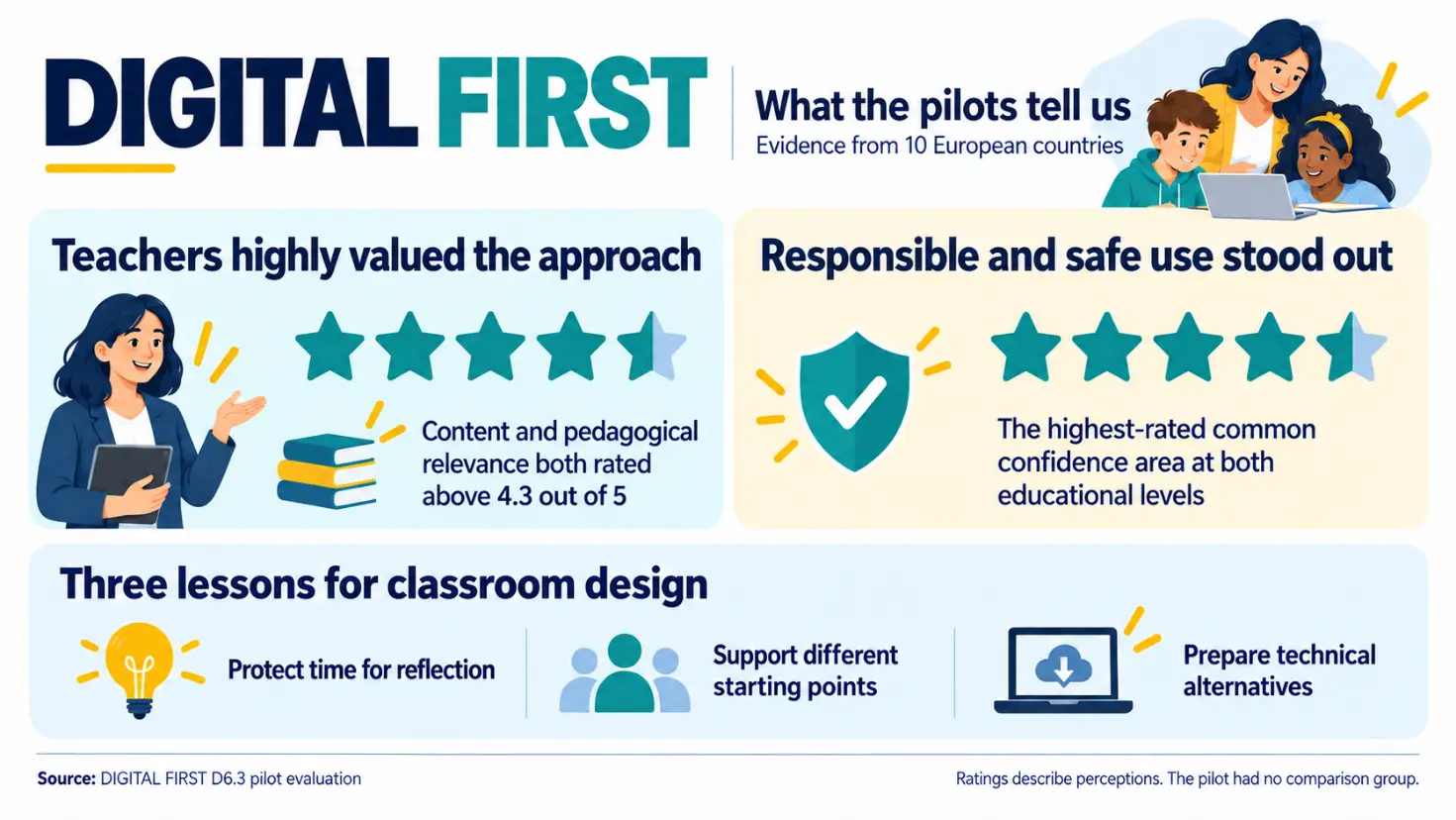
Teachers across partner countries responded very positively to the training experience. According to the evaluation results, participants largely agreed that the activities were:
- relevant,
- useful,
- engaging,
- and supportive for future classroom implementation.
Many teachers particularly appreciated:
- the practical nature of the materials,
- the flexibility of the learning scenarios,
- and the possibility to adapt activities to different classroom contexts.
Digital Technologies Beyond Technical Skills
One of the strongest outcomes of the training was encouraging teachers to reflect on the broader role of digital technologies in education.
The activities focused not only on tools and technology, but also on how digital learning can support:
- critical thinking,
- creativity,
- problem-solving,
- collaboration,
- and student engagement.
This approach helps move informatics education beyond purely technical knowledge and closer to real-life learning experiences relevant for today’s students.
What Teachers Still Need
The training activities also opened important conversations about the realities of introducing innovation into schools.
Across countries, teachers highlighted the need for:
- more preparation time,
- additional practical examples,
- continued professional support,
- reliable digital infrastructure,
- and access to appropriate classroom equipment.
These reflections provide valuable insight for the next phase of the project and help the consortium better understand the everyday challenges teachers face in schools.
Looking Ahead
The DIGITAL FIRST project now moves further into the piloting phase, where learning scenarios developed within the project will be tested and implemented in real classroom environments across Europe.
The teacher training activities marked an important step in preparing educators not only to use new materials, but to rethink how digital technologies can support more meaningful, creative, and student-centred learning experiences.