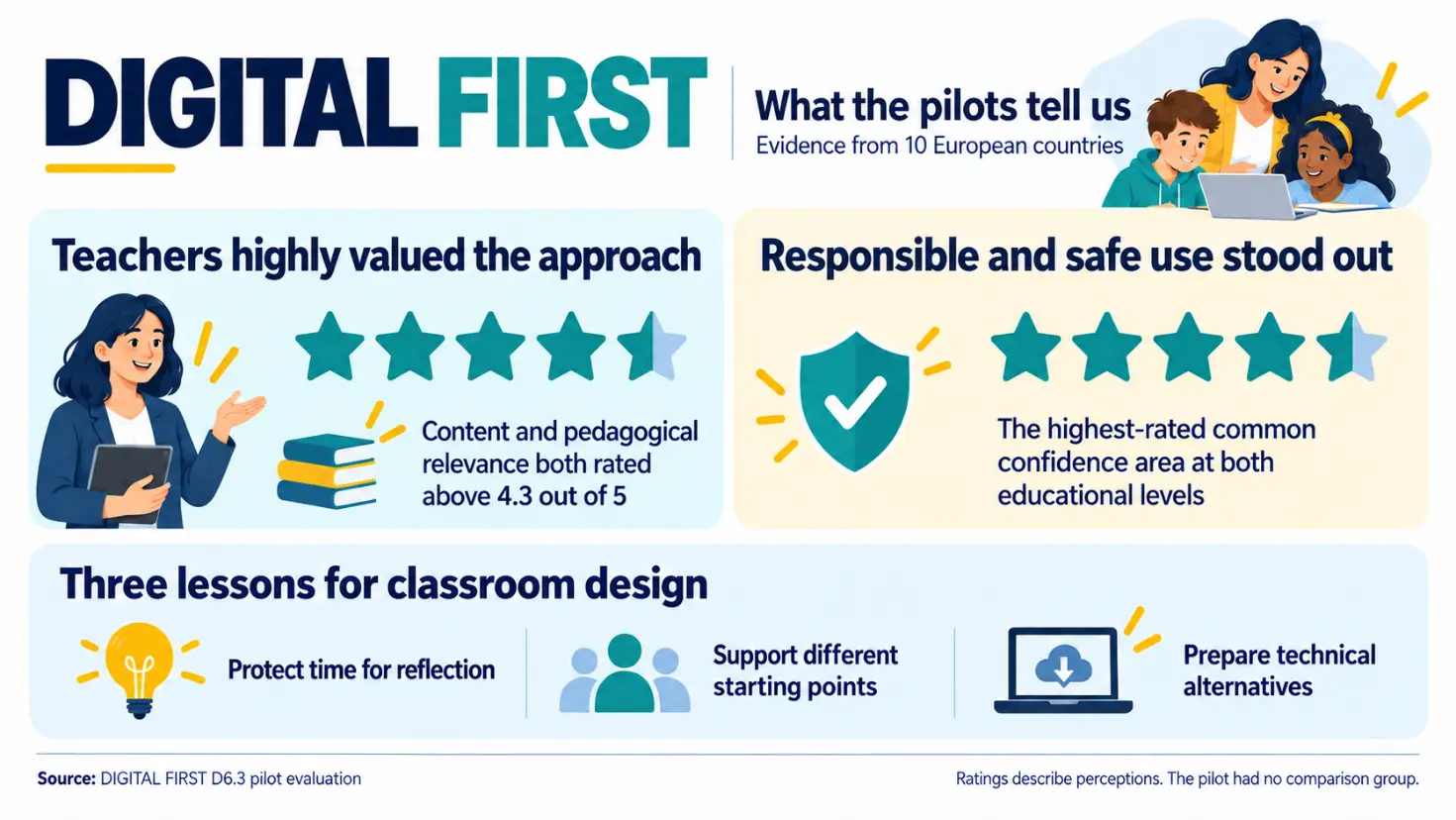

Across ten European countries, the pilot evaluation points to a promising approach: organise digital learning around what students want to express, investigate, create or solve. Teachers valued its educational relevance, while classroom experience showed where the learning scenarios need more practical support.
In August, DIGITAL FIRST shared the scale of its classroom pilots. The transnational evaluation now brings together 741 pre-pilot and 589 post-pilot student questionnaire records, 45 analysable teacher records, 75 parent records and qualitative evidence.
Start with a purpose students can understand
The project’s seven functions of digital technology connect informatics with personal expression, interaction, regulation, representation, inquiry, imagination and practical use. A learning activity becomes a way to evaluate information, explain an idea, create a digital product or solve a problem.
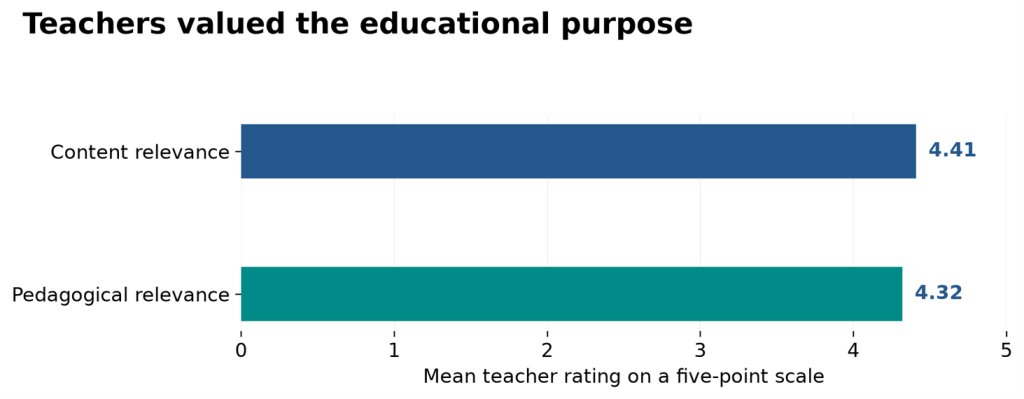
Teachers rated content relevance at 4.41 out of 5 and pedagogical relevance at 4.32. Classroom accounts describe students making, testing, discussing and reflecting, with teachers adapting instructions and examples to their needs. This supports the approach’s relevance, while showing that a worthwhile learning purpose still needs clear, usable materials.
Responsible digital participation stood out
Students reported positive confidence after the pilot, averaging 4.13 in Primary education and 3.97 in Secondary education. Responsible and safe technology use was the highest-rated common confidence item at both levels, reaching 4.27 and 4.20 respectively.
Qualitative accounts give these ratings context. Activities brought privacy, ethics, misinformation and critical judgement into classroom discussion. Students were encouraged to consider what they share, how they assess information and how they participate in digital environments.
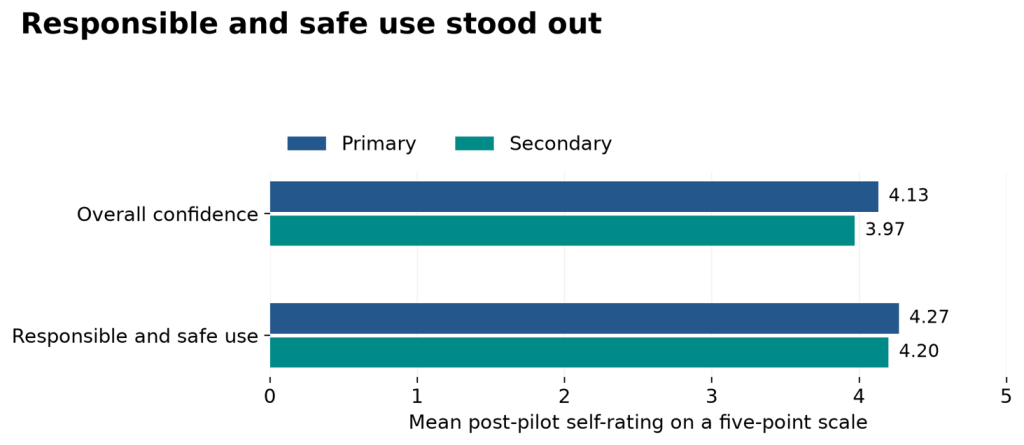
These results offer an encouraging picture of how students experienced the pilot activities. The high ratings for responsible and safe technology use suggest that learners felt confident in an area central to the DIGITAL FIRST approach. Qualitative accounts help explain what these ratings mean: activities encourage students to discuss privacy, question the credibility of information, consider the consequences of sharing content and reflect on their participation in digital environments. Together, these sources support the educational value of making responsible digital participation an explicit part of informatics learning.
However, confidence and demonstrated capability are different forms of evidence. Students’ self-assessments tell us how they perceive their abilities, but do not directly show how successfully they would apply them in an unfamiliar situation. The positive averages also allow for different experiences and levels of confidence among individual learners.
What real classrooms taught us
Teachers’ feedback identified three recurring conditions for successful delivery. First, time: dense activities and practical transitions can squeeze out the final discussion and reflection. Second, different starting points: familiarity with digital devices does not mean that every learner can independently manage an unfamiliar interface or a complex task. Third, technical readiness: accounts, platform access, connectivity and licensing can interrupt an otherwise well-designed activity.
These issues affect the learning experience together. A difficult login consumes lesson time; an unfamiliar tool increases the need for guidance; an ambitious final product can leave too little space for students to explain their choices. Teachers’ adaptations were therefore an important part of the positive pilot experience.
Turning the findings into better classroom resources
The results report recommends maintaining the functional framework and strengthening support for it. Proposed revisions include a realistic core sequence with optional extensions, step-by-step models, and differentiated support, as well as technical alternatives that preserve the same learning objective.
The report also advocates practical teacher preparation, clearer links to curricula and assessment, and more consistent assessment records. The revised activities need to be re-tested under the intended classroom conditions to verify that initial difficulties have been addressed, while maintaining student reflection and active, meaningful participation. These are steps awaiting validation, intended for future follow-up projects, rather than improvements already proven by the evaluation.
What comes next
The overall assessment is one of qualified success. DIGITAL FIRST offers a promising framework for purposeful computer science education across diverse school settings. Its adoption on a larger scale will depend on the availability of practical resources, viable lesson plans, and support for local adaptation. Further evidence is needed to determine whether students retain and apply the skills they have acquired beyond the pilot phase.
For educators, this pilot experience offers a practical starting point: clarifying the purpose of the digital task, giving all students the opportunity to participate, and setting aside time to analyze the activity’s results.