
What connects a conversation about ageing school computers with a classroom discussion about artificial intelligence? In the Greek experience of Digital First, both belong to the same educational question: how can informatics help young people understand and shape the digital environments they already inhabit?
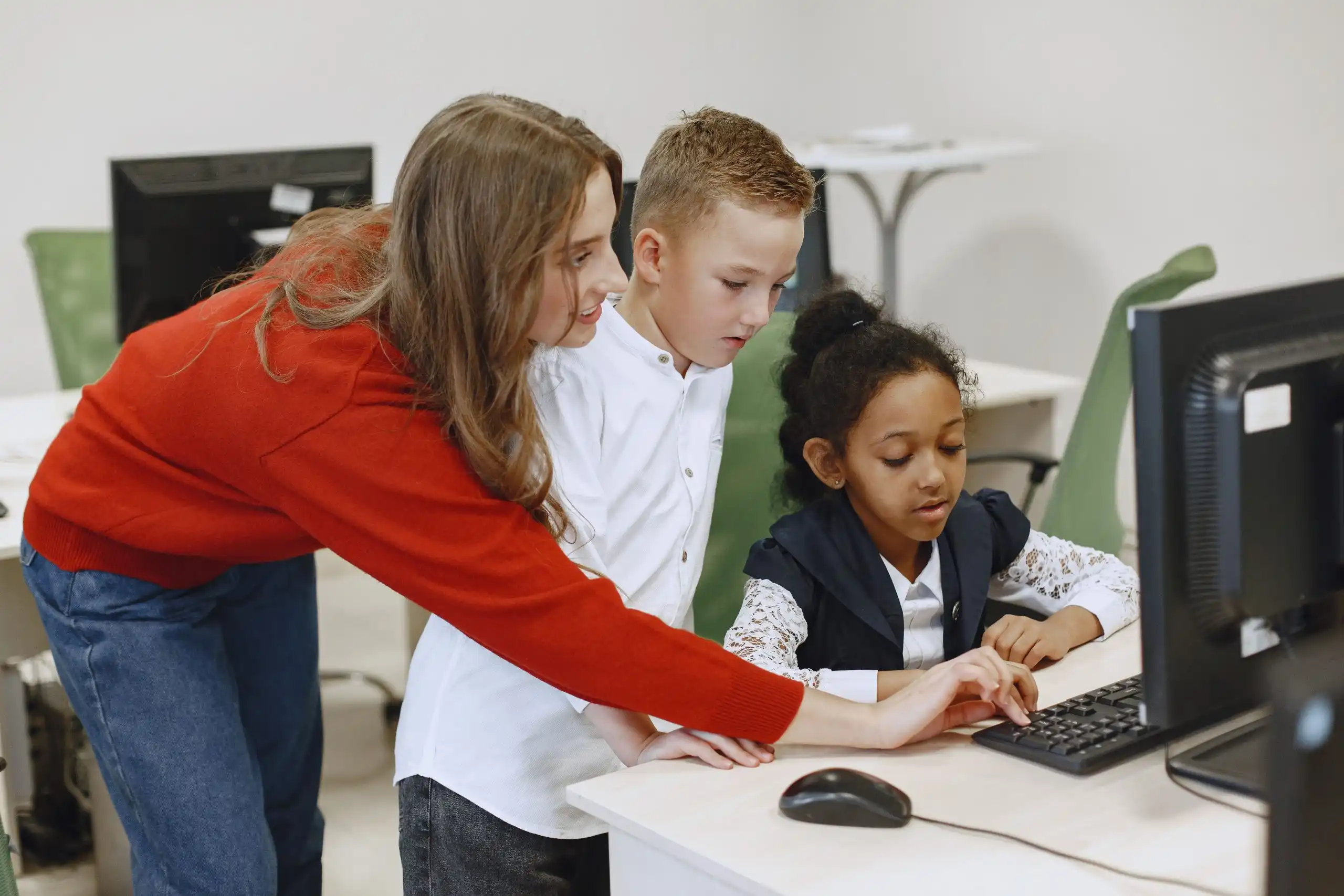
Illustrative stock photograph. Photo: Gustavo Fring / Pexels. Not a Digital First activity.
As the project approaches its conclusion on 30 November 2026, the activities documented in Greece offer a useful perspective on the path from listening to stakeholders to working with learners. Focus groups identified concerns and interests. Dialogue Clubs brought those experiences into discussion about teaching. Teacher preparation preceded classroom piloting. Taken together, these stages suggest that educational innovation needs sustained attention to people, context and purpose.
Supported by the Greek consortium partner Project Lighthouse NPO, this work connects local experience with a shared European effort to make informatics more relevant to learners. Its value lies in the relationships between the stages: the questions raised by participants, the pedagogical choices they invite and the opportunities to explore those choices in school.
Listening before proposing solutions
In July 2024, Project Lighthouse conducted two focus groups involving informatics teachers, parents and students. Participants discussed the strengths and limitations of informatics education and the relationship between school learning and everyday digital life.
Participants associated informatics with critical thinking and problem-solving. Teachers raised concerns about outdated equipment and software, curriculum relevance and opportunities for continuing professional development. Students also wanted more interactive learning and opportunities to create with technology, expressing interests that included artificial intelligence and game development.
These perspectives from the participating groups helped make the educational problem concrete. Familiarity with a device could coexist with limited opportunities to investigate how digital systems work, evaluate information or develop a creative project. Listening to teachers, parents and students together also made it possible to consider learning across school and home, rather than treat those environments in isolation.
The research also raised questions about resources. An ambitious activity has to fit the equipment, time and support actually available. That consideration remained relevant as the project moved towards teaching approaches that connected informatics with meaningful applications.
Turning everyday experiences into educational questions
Greece’s Dialogue Clubs provided a space to examine these issues with stakeholders. Participants discussed balancing traditional and digital teaching methods, using emerging technologies thoughtfully, and creating interactive learning environments. The first two Dialogue Clubs considered personal expression and the communication of information.
Examples included how young people use TikTok and Minecraft to express themselves and construct digital identities, and how tools such as Canva and Google Classroom can support collaboration and the presentation of information. These were discussion examples, rather than a list of applications that every school was expected to adopt.
Their significance lay in the questions they opened. What does a learner want to communicate? How might an audience interpret a digital message? What makes a presentation trustworthy as well as visually appealing? Such questions connect learners’ existing experiences with concepts that teachers can explore deliberately.
This is consistent with Digital First’s functional approach: consider the purpose technology serves in an activity and the understanding learners need to use it meaningfully. The project’s recommendations on teaching and assessing informatics provide a fuller account of that framework. The Greek discussions illustrate why a shared pedagogical approach still needs local interpretation.
Preparing teachers to make the approach workable
The Greek pilot followed teacher training undertaken within Digital First. Preparation gave educators a route into using the project’s teaching scenarios in real classroom conditions. It connected a shared educational approach with the practical decisions involved in guiding a particular group of learners.
At consortium level, the published training overview describes practical activities, discussion and preparation for using the learning scenarios. It also records continuing needs such as preparation time, professional support and reliable infrastructure. These are European findings, rather than results attributable specifically to Greek participants.
For the Greek journey, teacher preparation forms an important bridge. Research and stakeholder dialogue can identify priorities, but educators still have to select activities, anticipate questions and adapt the material to a particular class. The project’s teacher competence resources provide a wider framework for considering those responsibilities.

Collaborative learning with teacher guidance. Illustrative stock photograph. Photo: Max Fischer / Pexels. Not a Digital First activity.
Meeting learners in Kato Kastritsi
At the High School of Kato Kastritsi in Patras, 20 lower-secondary students aged 12 to 15 participated in activities addressing two themes: Communication and Online Interaction, and Artificial Intelligence and the Digital Future.
Through discussion, collaboration and guided reflection, learners examined respectful online communication, digital identity, misinformation, privacy, bias and responsible technology use. The topics connected directly with situations young people encounter when communicating online or assessing digital content.
Teachers reported strong engagement with the practical, scenario-based format and valued the scenarios’ flexibility. They described opportunities for learners to practise critical thinking, teamwork, empathy, communication and reflective decision-making, with activities that could be adapted to classroom needs.
These are qualitative observations from a small local pilot, without a controlled comparison or long-term follow-up. They offer a useful starting point for further teaching and investigation. In particular, the classroom experience draws attention to the teacher’s role in helping learners question familiar habits and articulate why a particular digital choice is responsible or reliable.
Reading the stages together
Seen as a whole, the Greek journey brings several relationships into focus. Concerns about curriculum relevance in the focus groups are echoed in the pilot’s use of everyday digital situations. Dialogue Club discussions about expression and information connect with classroom attention to communication, identity and reliability. Calls for teacher development are reflected in the need for preparation and guided learning.
Reading the stages together suggests a coherent educational direction: listen to participants, discuss learning purposes, support teachers and examine what happens when an approach reaches learners. Each stage contributes something different. Research makes concerns visible, dialogue invites interpretation, preparation supports educational decisions and classroom experience brings those decisions into contact with learners’ responses.
The practical lesson is to keep these stages connected. Schools considering similar work can begin with a discussion of learners’ digital experiences, agree a specific learning objective, prepare an achievable activity and review students’ explanations afterwards. Keeping a brief record of those decisions can help colleagues adapt the experience for a different class and identify questions for further discussion.
Carrying the learning forward
Greece’s contribution offers a situated example within a European collaboration. It suggests that relevance, thoughtful teacher guidance and opportunities for reflection deserve continued attention when informatics education is developed. It also leaves useful questions for further work: which adaptations suit different learners, what support do teachers need, and how well does learning transfer to unfamiliar situations?
The project’s conclusion creates an opportunity to revisit those questions with its published reports and multimedia resources. The value of the Greek journey lies in making the movement from research to practice visible, with enough detail and restraint for other schools to learn from it and continue the work in their own contexts.